ALLPCB


In the fast-paced world of wearable technology, fitness trackers have become essential gadgets for health-conscious individuals. These compact devices monitor heart rate, track steps, and even analyze sleep patterns. However, their small size and high-performance components generate significant heat, which can affect functionality and user comfort. Effective PCB thermal management is critical to ensure reliable operation and longevity. In this comprehensive guide, we’ll explore proven strategies for fitness tracker heat dissipation, including the use of thermal vias, heat sink PCB designs, and thermal simulation tools to optimize performance.
Why Thermal Management Matters for Fitness Tracker PCBs
Fitness trackers are packed with powerful components like sensors, microcontrollers, and Bluetooth modules, all squeezed into a tiny form factor. These components generate heat during operation, and without proper dissipation, temperatures can rise to levels that degrade performance or damage the device. Overheating can also cause discomfort to the user, as the device is often worn directly on the skin. Effective PCB thermal management ensures that heat is efficiently moved away from critical components, maintaining optimal performance and user safety.
Key Challenges in Fitness Tracker Heat Dissipation
The design of fitness trackers presents unique challenges for heat dissipation. Let’s break down the primary issues:
- Compact Size: With limited space, there’s little room for large cooling solutions like fans or bulky heat sinks.
- High Component Density: Components are placed close together, leading to concentrated heat in small areas.
- Power Efficiency: High-performance features demand power, which increases heat output from processors and batteries.
- User Comfort: Since fitness trackers are worn on the wrist, excessive heat can cause skin irritation or discomfort.
Addressing these challenges requires innovative fitness tracker heat dissipation strategies tailored to the constraints of wearable devices.
Effective Thermal Management Strategies for Fitness Tracker PCBs
Below, we dive into actionable techniques to manage heat in fitness tracker PCBs, ensuring reliability and comfort.
1. Leveraging Thermal Vias for Efficient Heat Transfer
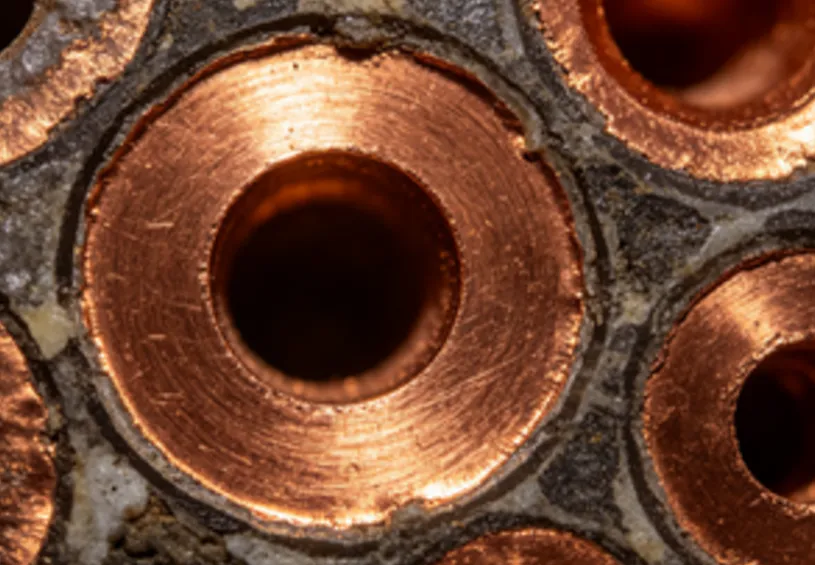
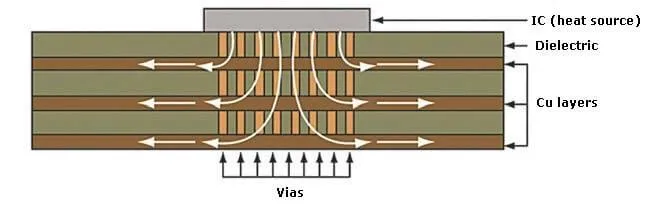
Thermal vias are small, copper-lined holes in a PCB that transfer heat from one layer to another, typically from a hot component on the surface to a cooler layer or heat-dissipating structure. In fitness trackers, where space is limited, thermal vias play a crucial role in moving heat away from critical components like the microcontroller or power management ICs.
For example, placing an array of thermal vias beneath a high-power component can reduce its operating temperature by up to 10-15°C, depending on the PCB design and material. A typical via diameter of 0.3mm with a spacing of 1.2mm can create an effective thermal path. The vias connect to a copper plane or external layer, spreading heat across a larger area for dissipation.
Design Tip: Ensure thermal vias are filled or plated to maximize conductivity. Unfilled vias can trap air, reducing their effectiveness. Additionally, position vias directly under heat-generating components for optimal results.
2. Integrating Heat Sink PCB Designs for Enhanced Cooling
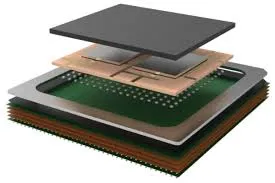
A heat sink PCB design involves using the PCB itself or attaching external structures to act as a heat sink, absorbing and dissipating heat. In fitness trackers, where traditional bulky heat sinks aren’t feasible, the PCB can be engineered with thicker copper layers or dedicated heat-dissipating areas to serve this purpose.
For instance, increasing the copper thickness from 1oz (35μm) to 2oz (70μm) on outer layers can improve heat spreading by up to 30%. Some designs also incorporate metal core PCBs (MCPCBs), which use a metal substrate like aluminum to enhance thermal conductivity. These materials can achieve thermal conductivity values of 1-2 W/m·K, far superior to standard FR4 materials (0.3 W/m·K).
Design Tip: If space allows, consider adding small external heat spreaders made of lightweight materials like aluminum or graphite. These can be attached to the PCB over high-heat areas to improve dissipation without adding significant bulk.
3. Optimizing Component Placement for Heat Distribution
Strategic component placement is a simple yet effective way to manage heat in fitness tracker PCBs. By spacing out heat-generating components, you can prevent localized hot spots. For example, place the main processor away from the battery management system to avoid cumulative heating effects.
Additionally, position sensitive components, like temperature sensors, away from heat sources to ensure accurate readings. Use PCB layout software to simulate heat distribution during the design phase, allowing you to identify and address potential issues before manufacturing.
Design Tip: Surround high-power components with ground planes or copper pours to act as mini heat sinks, dissipating heat across the board. A ground plane covering 70% of the PCB area can significantly lower overall temperatures.
4. Using Advanced Materials for Better Thermal Performance
The choice of PCB material directly impacts thermal performance. Standard FR4 materials are common but have limited thermal conductivity. For high-performance fitness trackers, consider advanced materials like high-Tg FR4 (with glass transition temperatures above 170°C) or ceramic-based substrates for better heat resistance and conductivity.
While these materials may increase costs by 20-40%, they can extend the lifespan of the device by reducing thermal stress on components. For instance, ceramic substrates can handle temperatures up to 250°C without degrading, compared to FR4’s limit of around 130°C.
Design Tip: Balance cost and performance by using advanced materials only in critical areas of the PCB, such as under high-power components, while retaining standard materials elsewhere.
5. Harnessing Thermal Simulation for Predictive Design
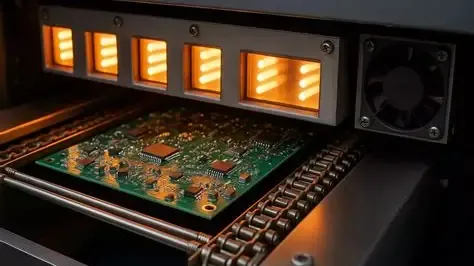
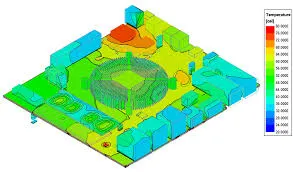
Thermal simulation is a powerful tool for predicting and optimizing heat dissipation in fitness tracker PCBs before production. Simulation software can model heat flow, identify hot spots, and test different cooling strategies in a virtual environment, saving time and reducing costly redesigns.
For example, thermal simulation can reveal that a specific component placement causes a temperature spike of 60°C under load. By adjusting the layout or adding thermal vias, you can reduce this to a safer 40°C. Common simulation tools allow you to input parameters like power dissipation (e.g., 1W for a processor) and ambient temperature (e.g., 25°C) to generate accurate heat maps.
Design Tip: Run simulations under worst-case scenarios, such as continuous operation at maximum power, to ensure your design can handle extreme conditions. This is especially important for fitness trackers used during intense workouts.
Balancing Thermal Management with Other Design Constraints
While focusing on fitness tracker heat dissipation, it’s important to balance thermal management with other design goals like size, weight, and cost. For instance, adding too many thermal vias can increase manufacturing complexity and cost by 10-15%. Similarly, using advanced materials or thick copper layers may make the device heavier, which could affect user comfort.
A practical approach is to prioritize thermal solutions based on the most critical components. Focus on protecting high-power ICs and sensors first, then address secondary heat sources if needed. Iterative testing and simulation can help fine-tune the design to meet all requirements without over-engineering.
Real-World Benefits of Effective PCB Thermal Management
Implementing robust PCB thermal management strategies offers several benefits for fitness trackers:
- Improved Reliability: Lower operating temperatures reduce the risk of component failure, extending the device’s lifespan by 20-30%.
- Enhanced Performance: Stable temperatures ensure consistent operation, preventing thermal throttling of processors.
- User Comfort: Effective heat dissipation keeps the device cool to the touch, even during extended use.
- Energy Efficiency: Better thermal designs can reduce power loss due to heat, improving battery life by up to 10%.

Future Trends in Fitness Tracker Thermal Management
As fitness trackers evolve, so do the demands on thermal management. Emerging trends include:
- Miniaturized Cooling Solutions: Innovations like micro heat pipes and graphene-based heat spreaders offer high efficiency in tiny spaces.
- Smart Thermal Regulation: Future devices may integrate sensors to dynamically adjust power output based on temperature readings.
- Sustainable Materials: Eco-friendly, high-conductivity materials are being developed to reduce environmental impact without sacrificing performance.
Staying ahead of these trends can give manufacturers a competitive edge in designing next-generation fitness trackers.
Conclusion: Keeping Fitness Trackers Cool and Reliable
Thermal management is a cornerstone of high-performance fitness tracker design. By implementing strategies like thermal vias, heat sink PCB designs, optimized component placement, advanced materials, and thermal simulation, engineers can tackle the challenges of fitness tracker heat dissipation effectively. These techniques not only enhance device reliability and performance but also ensure user comfort—a key factor in wearable technology.
At ALLPCB, we understand the importance of balancing thermal performance with design constraints. Our expertise in PCB manufacturing and design support can help you create fitness trackers that stay cool under pressure. Whether you’re optimizing a layout for heat distribution or selecting the right materials, we’re here to assist every step of the way.