ALLPCB


When it comes to PCB design, choosing between buried resistors and surface mount technology (SMT) can significantly impact your project’s performance, cost, and manufacturability. So, which is the right choice for your design? In short, buried resistors are ideal for high-density, space-constrained designs and improved signal integrity, while surface mount resistors are more cost-effective, easier to assemble, and widely compatible with standard manufacturing processes. The decision depends on your specific needs, such as board space, budget, and performance requirements.
In this comprehensive guide, we’ll dive deep into the differences between buried resistors and surface mount components, exploring their advantages, disadvantages, and tradeoffs. Whether you’re an engineer working on a compact wearable device or a complex multilayer board, this blog will help you make an informed decision for your next project. Let’s break down the key aspects of “buried resistors vs. surface mount” to find the best fit for your PCB design.
What Are Buried Resistors and Surface Mount Components?
Before we compare the two technologies, let’s define what buried resistors and surface mount components are in the context of PCB design.
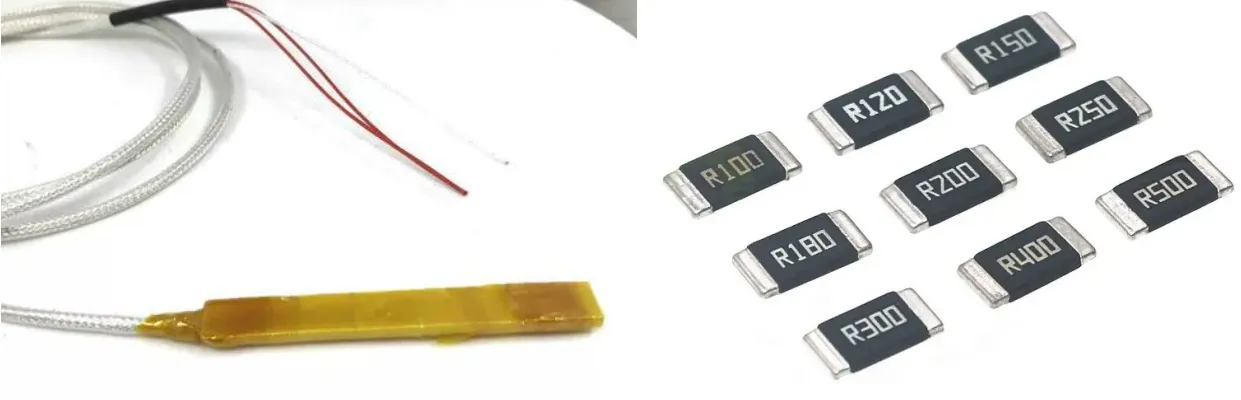
Buried Resistors are resistive elements integrated directly into the inner layers of a multilayer PCB during the manufacturing process. Unlike traditional resistors that sit on the board’s surface, these are embedded within the substrate, often using specialized materials like thin-film resistive layers. This integration eliminates the need for a discrete component on the board’s surface, saving space and potentially enhancing performance.
Surface Mount Components, on the other hand, are discrete electronic parts, such as resistors, capacitors, and ICs, mounted directly onto the surface of a PCB. Surface mount technology (SMT) has become the industry standard for most electronic assemblies due to its compatibility with automated manufacturing and ability to support smaller, lighter designs compared to older through-hole methods.
Understanding these definitions sets the stage for a detailed comparison of “buried resistors vs. surface mount” in terms of design flexibility, performance, and cost. Let’s explore each aspect step by step.
Advantages of Buried Resistors in PCB Design
Buried resistors offer unique benefits that make them an attractive choice for specific applications. Here are the key advantages:
- Space Savings: By embedding resistors within the PCB layers, you free up valuable surface area for other components or to reduce the overall board size. This is especially critical in compact designs like wearables or IoT devices where every square millimeter counts.
- Improved Signal Integrity: Buried resistors can be placed closer to the point of use, reducing parasitic inductance and capacitance. For high-frequency applications, this can result in better signal performance, with reduced noise and crosstalk. For instance, in RF designs operating at frequencies above 1 GHz, minimizing trace lengths with buried resistors can be a game-changer.
- Enhanced Reliability: Since buried resistors are integrated into the board, they are less prone to mechanical stress, vibration, or damage during assembly compared to surface-mounted parts. This can improve the durability of the PCB in harsh environments.
- Design Flexibility: Embedding resistors allows for more creative routing and layer stacking in multilayer boards, enabling engineers to optimize layouts for complex designs.
These advantages make buried resistors a strong contender for high-density and high-performance applications. However, they come with certain limitations, which we’ll discuss later under “buried resistor disadvantages.”
Advantages of Surface Mount Technology (SMT) in PCB Design
Surface mount technology has become the go-to method for most PCB assemblies, and for good reason. Let’s look at the primary benefits of using SMT resistors:
- Cost-Effectiveness: SMT components are widely available and compatible with automated pick-and-place machines, reducing labor costs during assembly. For example, assembling a board with thousands of surface mount resistors is far more economical than integrating buried resistors, which require specialized manufacturing processes.
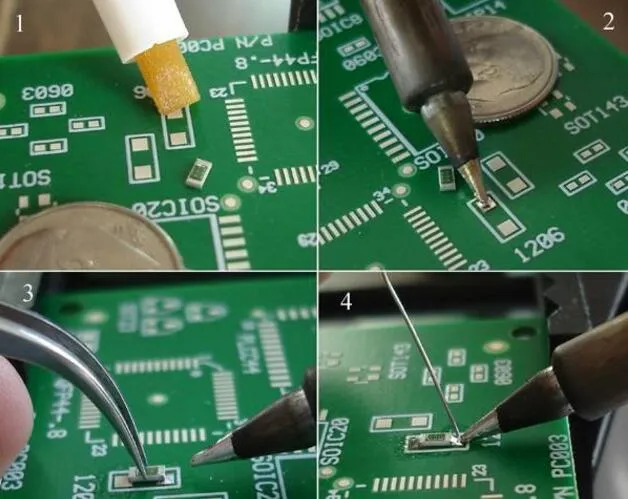
- Ease of Assembly and Repair: Surface mount resistors can be easily placed, soldered, and replaced if needed. This makes prototyping and rework simpler compared to buried resistors, which are inaccessible once embedded.
- Wide Component Availability: SMT resistors come in a vast range of values, tolerances, and power ratings, making them suitable for almost any application. Whether you need a 1% tolerance 0402 resistor or a high-power component, the options are nearly limitless.
- Compatibility with Standard Processes: Most PCB manufacturers are equipped to handle SMT assembly, ensuring faster turnaround times and lower risks of production errors compared to specialized processes for buried resistors.
For many engineers, the practicality and affordability of SMT make it the default choice. However, it’s not without its challenges, especially in high-density or high-speed designs.
Disadvantages of Buried Resistors
While buried resistors have compelling benefits, there are notable “buried resistor disadvantages” that may deter their use in certain projects:
- Higher Manufacturing Costs: The process of embedding resistors into PCB layers involves advanced techniques, such as laser trimming or thin-film deposition, which increase production costs. For small-scale or budget-conscious projects, this can be a significant barrier.
- Limited Adjustability: Once a buried resistor is integrated into the board, its value cannot be changed or replaced without redesigning and remanufacturing the PCB. This lack of flexibility can be problematic during prototyping or if design changes are needed.
- Complex Design Process: Designing with buried resistors requires specialized software tools and expertise to ensure accurate placement and value specification. This can add time and complexity to the design phase.
- Manufacturing Constraints: Not all PCB fabrication facilities support buried resistor technology, which may limit your choice of manufacturers and potentially increase lead times.
These drawbacks highlight why buried resistors are typically reserved for niche applications where space and performance are critical.
Disadvantages of Surface Mount Technology (SMT)
Despite its widespread adoption, SMT has limitations that can impact certain designs. Here are the main disadvantages:
- Space Constraints: In extremely compact designs, surface mount components can still take up valuable real estate on the PCB. As devices shrink, fitting all necessary components on the surface becomes increasingly challenging.
- Signal Integrity Issues: For high-speed or high-frequency applications, the physical distance between SMT components and their connection points can introduce parasitic effects, such as inductance. This can degrade signal quality, especially in designs operating at frequencies above 500 MHz.
- Thermal Management Challenges: SMT components, especially smaller ones like 0201 or 0402 packages, can struggle with heat dissipation due to their limited surface area. This can lead to reliability issues in high-power applications.
- Mechanical Vulnerability: Surface mount components are more susceptible to damage from mechanical stress, vibration, or improper handling during assembly compared to embedded solutions.
PCB Design Tradeoffs: Buried Resistors vs. Surface Mount
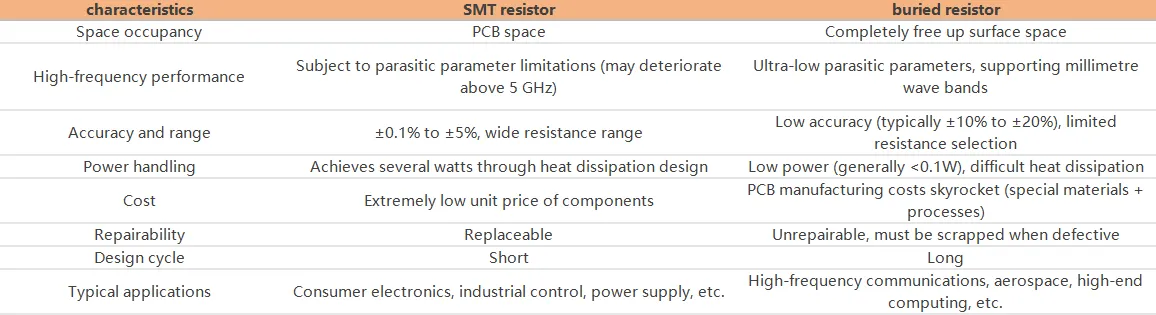
When evaluating “PCB design tradeoffs,” the choice between buried resistors and surface mount components often comes down to balancing several factors. Let’s break down the key tradeoffs to help you decide:
1. Space vs. Cost
Buried resistors save surface space, making them ideal for high-density designs. However, the cost of manufacturing a PCB with embedded resistors can be 20-30% higher than a comparable SMT design due to the specialized processes involved. If budget is a primary concern, SMT is usually the better choice.
2. Performance vs. Flexibility
For high-frequency applications, buried resistors can reduce trace lengths and improve signal integrity by minimizing parasitic effects. For example, a buried resistor placed directly beneath a high-speed IC can reduce loop inductance by up to 50% compared to an SMT resistor located farther away. However, SMT offers greater flexibility for design changes and repairs, as components can be swapped without redesigning the board.
3. Reliability vs. Accessibility
Buried resistors enhance reliability by protecting the component from external stressors, but they are inaccessible for testing or replacement. SMT components, while more exposed to potential damage, can be easily inspected and reworked if issues arise.
4. Manufacturing Complexity vs. Scalability
Embedding resistors requires advanced manufacturing capabilities, which may not be available at all facilities. This can limit scalability for large production runs or quick turnarounds. SMT, being a standard process, is widely supported and scales easily for high-volume production.
These “PCB design tradeoffs” underscore the importance of aligning your choice with the specific goals of your project. Consider factors like target application, production volume, and performance requirements when making your decision.
Applications: When to Use Buried Resistors or Surface Mount
The choice between buried resistors and SMT often depends on the application. Here are some scenarios to guide your decision:
- Use Buried Resistors When:
- You’re designing a compact, high-density PCB where surface space is at a premium (e.g., smartphones, medical implants).
- Signal integrity is critical, such as in RF or high-speed digital circuits operating at frequencies above 1 GHz.
- Reliability in harsh environments is a priority, as buried components are better protected from mechanical stress.
- Use Surface Mount Technology When:
- Cost and ease of assembly are top priorities, especially for low- to medium-density designs.
- You need flexibility for prototyping, testing, or potential design iterations.
- Your project requires a wide range of resistor values or quick scalability for high-volume production.
By matching the technology to your application, you can optimize both performance and cost-effectiveness.
Conclusion: Making the Right Choice for Your PCB Design
Deciding between buried resistors and surface mount technology is a critical step in PCB design that can influence your project’s success. Buried resistors shine in space-constrained, high-performance applications where signal integrity and reliability are paramount. However, they come with higher costs and manufacturing complexity. Surface mount technology, on the other hand, offers affordability, flexibility, and compatibility with standard processes, making it the preferred choice for most designs despite limitations in ultra-compact or high-frequency scenarios.
Ultimately, the decision hinges on your specific requirements. Evaluate the “buried resistors vs. surface mount” debate by considering factors like board space, budget, signal performance, and production scale. By understanding the advantages, disadvantages, and tradeoffs of each approach, you can confidently select the best solution for your next PCB project.
At ALLPCB, we’re committed to supporting engineers with the tools and expertise needed to bring innovative designs to life. Whether you opt for buried resistors or surface mount components, our advanced manufacturing capabilities ensure your vision becomes reality with precision and efficiency.