ALLPCB


Definition and key characteristics
The smart grid integrates advanced sensing, communication, computing, and control technologies into the traditional power system to enable automation, intelligence, and digital operation. Based on market, environmental, and security considerations, a smart grid commonly exhibits eight characteristics: self-healing, interoperability, interactivity, coordination, efficiency, quality, integration, and sustainability. Self-healing is a prominent feature: the grid can detect existing or potential faults and take corrective or controlling actions to ensure reliable, safe, and efficient power delivery.
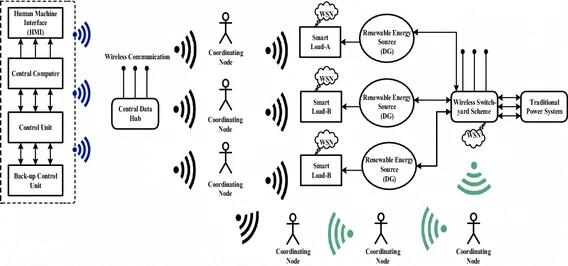
Interactivity refers to bidirectional interaction: the grid supports two-way power flow and two-way communication, allowing users to select options from provided information according to their needs. The smart grid applies advanced monitoring and control technologies to reduce costs and improve operational performance. Sustainability is another key characteristic: by integrating renewable, clean, and recycled energy sources, the smart grid reduces environmental impact, relieves heavy energy consumption, and helps address regional imbalances in energy supply.
Scope and composition
The smart grid is a modern power system built on conventional power networks and enhanced by information technology, communication technology, computer systems, control technology, and converged networks. It represents the direction of future power system development and encompasses several functional domains described below.
Core capabilities
- Automation, intelligence, and digitization: The smart grid is based on a variety of contemporary information technologies to achieve automated, intelligent, and digital network operation.
- Real-time monitoring and remote control: It enables immediate monitoring and remote control of grid reliability, safety, power quality, and operational efficiency.
- Energy optimization and sustainability: Through data analytics, energy management, and scheduling, the smart grid optimizes resource allocation and supports sustainable development.
- Demand-side matching: The grid can achieve precise matching of user demand, optimizing the balance between energy supply and consumption.
Main roles
- Improve system reliability and safety: Equipped with advanced monitoring devices and control systems, the smart grid provides comprehensive supervision and management of system status to enhance reliability and security.
- Improve efficiency and power quality: Advanced dispatching and control techniques, combined with real-time operation and monitoring, enable better allocation and management of energy to raise system efficiency and power quality.
- Optimize energy allocation and supply-demand balance: Accurate forecasting and management capabilities allow the grid to better match supply with demand and support sustainable energy use.
- Support integration of new energy sources: The smart grid can manage and control distributed new energy resources, facilitating their integration and increasing the diversity of energy supplies.
In summary, the smart grid is a technologically integrated power system that enables comprehensive monitoring and management, improves energy utilization and sustainability, and supports ongoing development and innovation in power systems.