ALLPCB


Compared with traditional power systems, the structure of new power systems will change significantly. Because renewable resources such as wind and solar are widely available, power sources will be distributed across the entire system rather than concentrated in large energy bases. The traditional top?down, vertically integrated control model is gradually shifting to a bottom?up, layered and clustered aggregation model, resulting in the emergence of distributed intelligent grids.
Core meaning
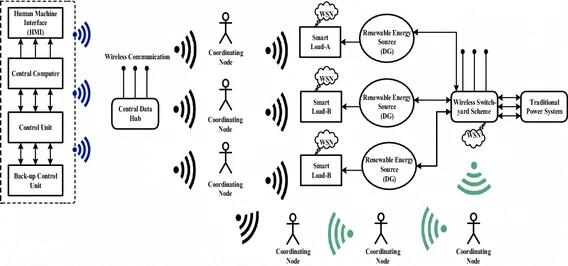
A distributed intelligent grid is a modern power system that differs from a centralized power system. It uses distributed generation and distributed energy storage technologies, and integrates advanced information and communication technologies and intelligent control systems. It offers high flexibility and reliability. The meaning of a distributed intelligent grid includes the following aspects:
- Distributed generation: The grid adopts distributed generation, combining multiple generation technologies, energy types, and scales in a mixed layout to reduce transmission costs and losses, improve energy utilization, and lower carbon emissions.
- Distributed energy storage: The grid integrates distributed storage systems into the power system to store, regulate, and balance energy, for example photovoltaic systems paired with storage devices.
- Intelligent control: Advanced intelligent control technologies optimize energy allocation based on user consumption patterns to improve efficiency and reduce dependence on the transmission system.
- Intelligent monitoring: The grid is equipped with advanced monitoring devices and sensors to collect real?time data on energy fluctuations, load status, and fault alarms, and to support operations and maintenance decision systems.
- Bidirectional power flow: The grid can enable bidirectional power flow for homes and businesses via microgrids, facilitating closer integration of generation, transmission, and consumption, and improving grid stability and security.
Three distribution levels
The term distributed, in the context of a distributed intelligent grid, can be understood at three levels.
Level 1: A grid with large-scale integration of distributed resources
This grid can be a smart microgrid or an active distribution grid. Its core characteristic is a high proportion of distributed sources, especially renewable distributed energy. Some grids at this level can achieve 100% penetration of renewable distributed resources at all times, forming fully autonomous microgrids.
Level 2: Physically dispersed grids across a region
Within a larger area, such as a metropolitan region, many of the Level 1 distributed intelligent grids coexist. These grids can collaborate horizontally at the same voltage level and vertically across different voltage levels, forming a distributed intelligent grid over a wider area.
Level 3: Logically aggregated distributed resources
This level resembles an advanced virtual power plant (VPP 3.0) concept. It aggregates various distribution networks or microgrids that span different administrative and ownership boundaries by combining information flow, current, and control flow. This enables logical aggregation of dispatchable distributed resources into a unified distributed intelligent grid.
Summary
In summary, a distributed intelligent grid is a new form of power system that incorporates multiple advanced technologies. It can improve energy utilization, reduce carbon emissions, enable bidirectional power flow, and increase the stability and flexibility of the power system. It represents a mainstream trend in future power system development.