ALLPCB


A man stood outside a jewelry store in central Rotterdam waiting to enter. Although the shop was busy, he remained by the door. As he lingered, a facial recognition camera quickly scanned his face and cross-checked it against a watchlist held by the local police. The system flagged him because he had a prior shoplifting record, and the store chose not to admit him.
This case, known as "FotoSwitch," took place in 2011. The program was based on work by the Rotterdam Rijnmond police department and developed with cooperation from the Dutch ministries responsible for security and justice, a financial regulator, and the Spanish biometrics company Herta Security.
The surveillance system gave the retailer a chance to screen customers before entry. If someone tried to obscure their face with sunglasses or similar items, the door could remain locked.
Retailers see this as a new tool to combat theft. But can facial recognition really change the underlying trend?
Facial recognition cannot stop evolving theft methods
Data from the UK Office for National Statistics showed 326,464 shoplifting incidents across England and Wales between April 2014 and March 2015, compared with 321,078 and 300,623 in the two prior years. Theft appears to be increasing, in part because thieves have adopted new tactics such as flash robbing and coordinating actions through social media.
Steve Rowen of the US retail research firm RSR said surveys of retailers show shoplifting remains a common challenge. Addressing it requires more than surveillance equipment; it demands disciplined control of merchandise and trained personnel. "Frankly, retailers cannot get much more description about an individual from CCTV alone," Dr. Rowen said.
CCTV can capture a suspect's appearance, but it may be a dead end if that appearance cannot be matched against a list of known or suspected shoplifters.
More retailers are considering facial recognition to protect assets. Joseph Rosenkrantz, CEO of FaceFirst, said their facial recognition technology has been deployed across several industries. A few years ago most retailers avoided the technology because of high costs.
Gary Lee, international business development manager at Herta Security, said Herta's technology is convenient: a single captured frame can be cross-matched against a database, and it can recognize the faces of 20 to 30 people in a crowd. The company did not disclose which retailers are using the system, but it is being tested in several large electronics chains.
Rosenkrantz said FaceFirst's systems are mainly used by grocery stores, DIY stores, and large retailers. Tools and electronics are easier to resell, making them frequent targets for theft rings.
Facial recognition requires a connected database
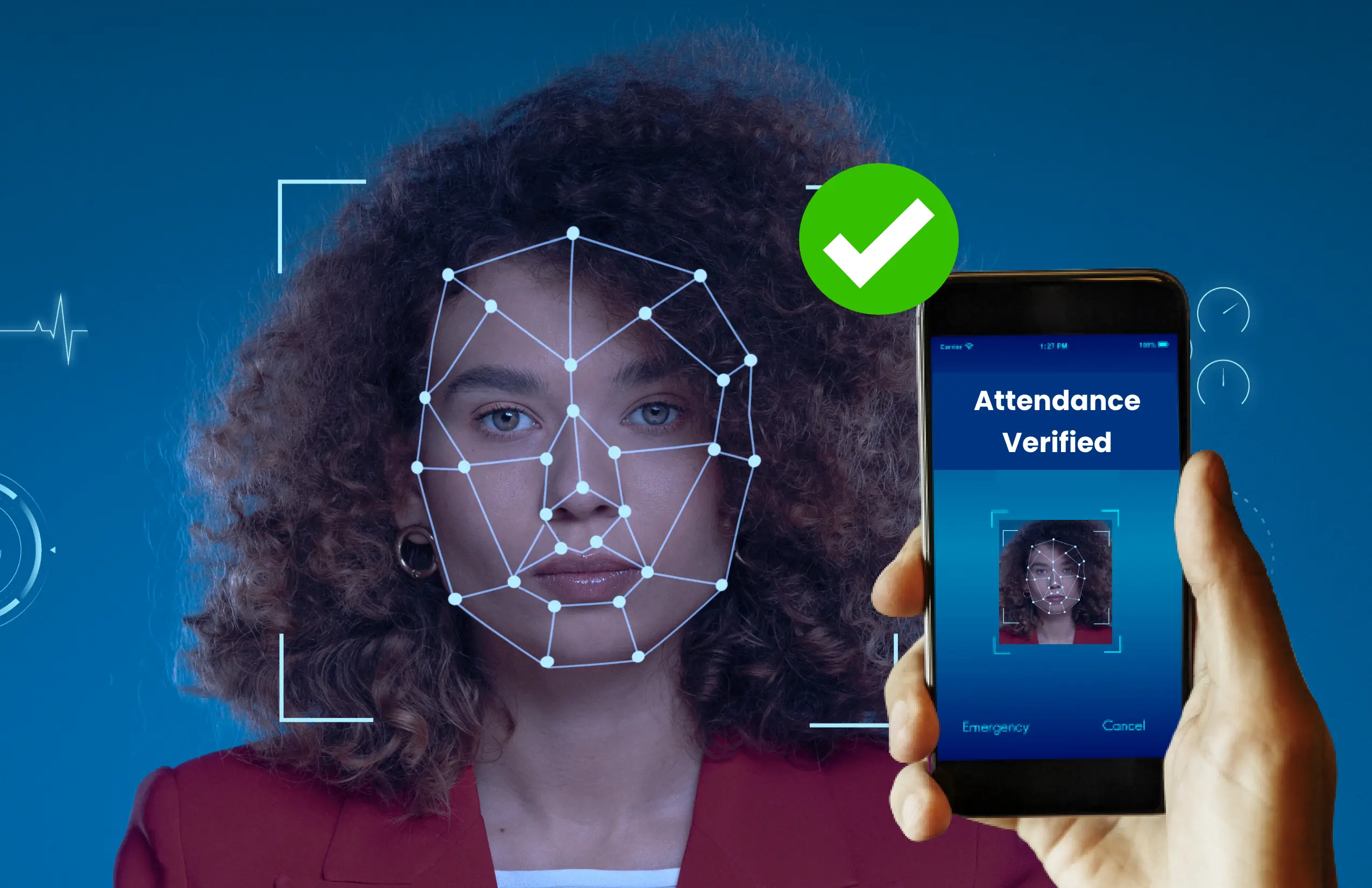
How does facial recognition work in retail? When the device finds a match in a database, it alerts store management and provides details about the suspected shoplifter: appearance, name, last arrest time and location, and the nature of previous offenses.
"Importantly, all of that information is packaged and sent only to the security manager at that location," Rosenkrantz said. "For example, if a group has 500 stores in Essex and someone enters one store, there is no need to notify managers at other stores. The system has location awareness, which is a basic function needed to make this work."
Using facial recognition requires access to a database of known offenders, which often involves collaboration with local police.
More stores are adopting biometric security systems: over a quarter of respondents in a recent survey admitted they recently began using facial recognition security. This can help protect inventory, but merchants must understand workflow and strictly control who can access the stored data.
Rowen noted that facial recognition technology and high-definition digital cameras represent significant investments for retailers. They are also exploring whether cheaper alternatives can replace parts of the system to improve cost-effectiveness.
"We spoke with a long-established department store that said facial recognition helped reduce theft and losses. Thieves who tried to steal there were just in the wrong place at the wrong time," Dr. Rowen said.
In the survey mentioned, almost half of respondents supported some form of facial recognition, while only 7% viewed the technology as a privacy violation. That raises another question: should customers be made aware that cameras may track them while they shop?
Lee argued this is an extension of the CCTV people already accept in daily life. "If the system is used for legitimate aims, protecting customers as well as the business, I think it is acceptable," he said, adding that tolerance depends on the system being operated "within the rules."
Is facial recognition a privacy intrusion?
Privacy remains a key concern. A UK Home Office report released in September encouraged the processing of biometric data, including facial recognition, and called for research into stronger regulation.
Because of these concerns, some startups have sought ways to track customers without capturing faces.
Netra, headquartered in Massachusetts, exemplifies this approach. Its technology analyzes store surveillance footage to identify products and customers, helping reconstruct events after incidents.
"We extract very abstract appearance features and do not invade customers' personal privacy," Netra CTO Shashi Kant said. Netra's software detects attributes such as clothing color, hair length, and features of backpacks or handbags.
"In most cases we have enough appearance features to distinguish between people. It is not just the person: items they carry, like a backpack or cart, are discriminative too," he said.
Prism developed a similar tool that turns cameras into smart data centers, using existing CCTV to record customer movement and shelf activity. "We use a more privacy-preserving approach... we do not necessarily track an individual," explained business manager Bob Cutting. "Software like Prism, when combined with other safeguards already in place, such as RFID tags and alarms, is most effective."
"All systems need some form of visual verification," he added. Stores require a way to confirm that an alarm was triggered by an actual product being taken, not a decoy.
Physical limitations of facial recognition systems
Whether using biometric scanners or more abstract tracking, these systems depend on store cameras; they must be able to "see" to work. "Camera placement is an art," Cutting said.
FaceFirst recommends installing cameras at entrances rather than aisles. Although many systems require around 90% accuracy before triggering an alert, that threshold is adjustable. In large environments such as airports, a looser threshold is sometimes chosen to favor safety, Rosenkrantz said.
Facial recognition software typically needs a frontal view to capture basic facial contours and eyes. "We've reduced the required information to a minimum," Lee said. "If someone turns away so their features cannot be correctly identified, that is a physical limitation. If the software cannot work under those conditions, it should not be used. In any case, this is a real physical constraint."
The technology is expected to improve in coming years and may attract more adopters as recognition becomes more fine-grained.
"Retailers are testing more identification technologies, including facial recognition," Rosenkrantz said. He believes market acceptance of facial recognition will grow.
However, the technology has limits. For example, it cannot help if an employee responsible for security is complicit in theft.
In November, US retailer Walmart said it tested facial recognition in stores for several months. The company found the technology could identify suspicious shoppers, but it was ineffective when the responsible employee was the one stealing.
Retailers will continue to balance improved security with respect for customer privacy. Facial recognition still needs time to find that balance.