 ALLPCB


If you're designing a printed circuit board (PCB) for wind turbine control systems, choosing the right materials is critical to ensure reliability, durability, and performance in harsh environments. Wind turbines operate under extreme conditions, from high winds and temperature fluctuations to constant vibration. So, what are the best materials for wind turbine control PCBs? In short, high-reliability materials like FR4, metal core PCBs, and advanced laminates with excellent thermal conductivity and durability are often the top choices. In this comprehensive guide, we'll dive deep into PCB material selection for wind turbines, compare options like FR4 vs. metal core PCB, and explore key factors such as thermal conductivity and durability to help you make an informed decision.
Why PCB Material Selection for Wind Turbines Matters
Wind turbine control systems are the brain behind the operation, managing everything from blade pitch adjustments to power output optimization. These systems rely on PCBs to function reliably over long periods, often in remote offshore or onshore locations where maintenance is costly and challenging. A failure in the PCB can lead to downtime, reduced energy production, and expensive repairs. That’s why selecting high-reliability PCB materials tailored for wind turbine environments is non-negotiable.
The primary challenges for wind turbine PCBs include exposure to temperature extremes (ranging from -40°C to 85°C in some regions), humidity levels up to 95%, and mechanical stress from vibrations. Materials must withstand these conditions while maintaining electrical performance, such as stable impedance (often in the range of 50-100 ohms for signal integrity) and low dielectric loss for efficient power transmission.

Key Factors in PCB Material Selection for Wind Turbines
When selecting materials for wind turbine control PCBs, several critical factors come into play. Let’s break them down to understand how they influence your choice.
1. Thermal Conductivity for Heat Dissipation
Wind turbine control systems often handle high power loads, generating significant heat. Poor heat dissipation can lead to component failure or reduced lifespan. PCB thermal conductivity, measured in watts per meter-kelvin (W/m·K), is a key metric. Standard materials like FR4 have a thermal conductivity of about 0.3-0.5 W/m·K, which may not be sufficient for high-power applications. In contrast, metal core PCBs, often made with aluminum or copper bases, offer thermal conductivity values of 1-4 W/m·K or higher, making them ideal for heat-intensive designs.
For wind turbine PCBs, where components like power converters and microcontrollers generate heat, opting for materials with high thermal conductivity ensures better performance and longevity. This is especially important in compact designs where heat buildup is a concern.
2. Durability Under Harsh Conditions
Wind turbine PCB durability is paramount since these systems are exposed to constant vibration, moisture, and salt corrosion (especially in offshore setups). Materials must resist cracking, warping, or delamination over time. High-reliability PCB materials, such as advanced epoxy resins or polyimide-based laminates, offer superior mechanical strength and resistance to environmental stressors. For instance, polyimide materials can endure temperatures up to 260°C without degrading, compared to standard FR4, which typically handles up to 130-140°C.
Additionally, coatings like conformal coatings can enhance durability by protecting against moisture and dust, extending the PCB’s operational life to match the typical 20-25-year lifespan of a wind turbine.
3. Electrical Performance and Signal Integrity
Wind turbine control systems rely on precise signal transmission to monitor and adjust operations in real time. Materials with low dielectric constant (Dk) and low dissipation factor (Df) are essential to minimize signal loss and maintain integrity, especially at higher frequencies. Standard FR4 has a Dk of about 4.5 and a Df of 0.02, which works for many applications but may fall short in high-speed designs. Advanced laminates, such as PTFE-based materials, offer a Dk as low as 2.2 and a Df of 0.0009, ensuring better performance for critical control circuits.
Choosing a material with stable electrical properties over a wide temperature range is crucial for consistent operation in varying environmental conditions.
4. Cost vs. Performance Trade-Off
While advanced materials offer superior performance, they come at a higher cost. Balancing performance with budget constraints is a common challenge in PCB material selection for wind turbines. Standard FR4 is cost-effective and widely used for less demanding applications, while metal core PCBs and high-frequency laminates are pricier but necessary for high-reliability designs. For a wind turbine project, it’s worth investing in better materials upfront to avoid costly failures down the line.
Comparing FR4 vs. Metal Core PCB for Wind Turbine Applications
Two common material choices for wind turbine control PCBs are FR4 and metal core PCBs. Let’s compare them across key parameters to help you decide which is best for your needs.
FR4: The Standard Choice
FR4, a fiberglass-reinforced epoxy laminate, is the most widely used PCB material due to its affordability and versatility. It offers decent mechanical strength and electrical insulation, with a glass transition temperature (Tg) of around 130-140°C. However, its limitations become apparent in wind turbine applications:
- Thermal Conductivity: Low at 0.3-0.5 W/m·K, making it less suitable for high-power circuits without additional heat sinks.
- Temperature Range: Struggles in extreme heat or cold, with potential for delamination or cracking over time.
- Durability: Adequate for mild conditions but may not withstand the constant vibration and humidity of wind turbine environments without protective measures.
FR4 is best for low-to-medium power control systems in onshore turbines with less extreme conditions.
Metal Core PCB: Superior Heat Management
Metal core PCBs (MCPCBs) feature a metal base layer, usually aluminum or copper, which acts as a heat sink. This design offers several advantages for wind turbine applications:
- Thermal Conductivity: High at 1-4 W/m·K, effectively dissipating heat from power-intensive components.
- Durability: Better resistance to mechanical stress and thermal cycling, reducing the risk of cracking or warping.
- Temperature Range: Handles a wider range of temperatures, making it suitable for both hot and cold climates.
The main downside of MCPCBs is their higher cost and weight compared to FR4. They are ideal for high-power applications or offshore turbines where heat management and reliability are top priorities.
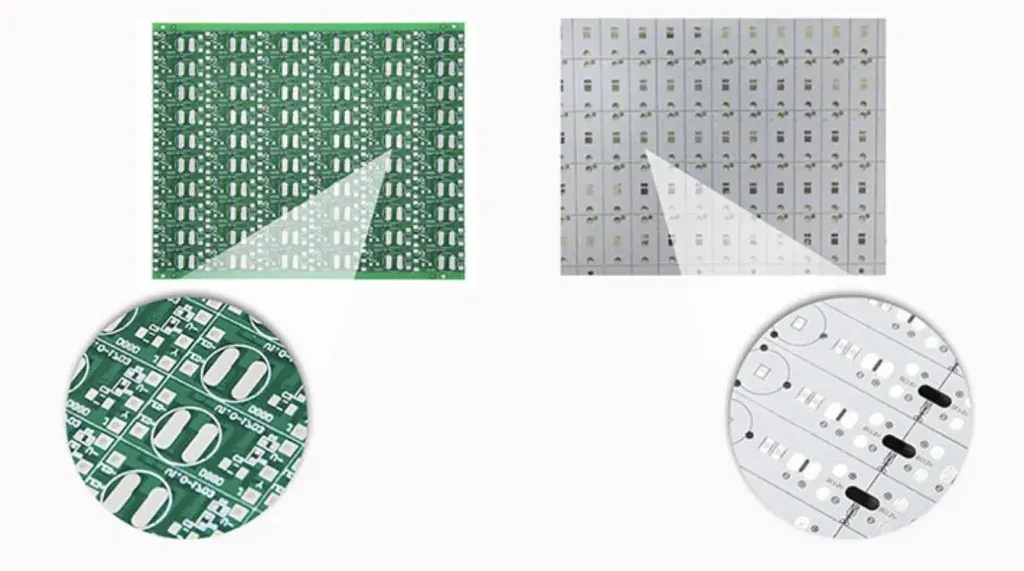
Verdict: For most wind turbine control PCBs, metal core PCBs are the better choice due to their superior thermal performance and durability. However, if cost is a major concern and the system operates in milder conditions, FR4 with proper design considerations (like added heat sinks) can still work.
High-Reliability PCB Materials for Wind Turbine Control Systems
Beyond FR4 and metal core PCBs, several advanced materials are gaining traction for high-reliability applications in wind turbines. These materials are engineered to meet the stringent demands of renewable energy systems.
Polyimide Laminates
Polyimide materials are known for their exceptional thermal stability, with a Tg exceeding 250°C. They resist degradation in extreme heat and offer excellent mechanical flexibility, which helps absorb vibrations. While more expensive, polyimide is a top choice for critical control circuits in harsh environments.
PTFE-Based Laminates
Polytetrafluoroethylene (PTFE) laminates provide low dielectric loss and high signal integrity, making them suitable for high-frequency applications in wind turbine monitoring systems. Their Dk of around 2.2 ensures minimal signal distortion, even at frequencies above 500 MHz.
Ceramic-Filled Materials
For applications requiring both high thermal conductivity and electrical insulation, ceramic-filled laminates are an excellent option. They offer thermal conductivity values up to 3 W/m·K and maintain stability across wide temperature ranges, ideal for power management circuits in wind turbines.
Selecting these high-reliability materials depends on the specific needs of your wind turbine control system, such as operating frequency, power load, and environmental exposure.
Design Tips for Enhancing Wind Turbine PCB Durability
Material selection is just one part of the equation. Proper design practices can further enhance the durability and performance of wind turbine PCBs, regardless of the material used.
- Use Conformal Coatings: Apply coatings to protect against moisture, salt spray, and dust, especially for offshore turbines. Silicone or acrylic coatings can extend PCB life by preventing corrosion.
- Optimize Layer Stack-Up: Design the PCB with a balanced stack-up to minimize stress and warping. For example, a 4-layer board with symmetrical copper distribution can reduce thermal expansion issues.
- Incorporate Thermal Vias: Add thermal vias near heat-generating components to improve heat dissipation, especially when using FR4 or other low-conductivity materials.
- Reinforce Mounting Points: Strengthen areas where the PCB is mounted to the turbine control enclosure to withstand vibrations. Using thicker boards (e.g., 2.0 mm instead of 1.6 mm) can also help.
These design strategies, combined with the right material choice, can significantly boost the reliability of your wind turbine control PCB.
Conclusion: Making the Right Choice for Your Wind Turbine PCB
Selecting the right materials for wind turbine control PCBs is a balancing act between performance, durability, and cost. High-reliability PCB materials like metal core PCBs, polyimide, and PTFE-based laminates offer superior thermal conductivity and durability, making them ideal for the harsh conditions of wind turbine environments. While standard FR4 can work for less demanding applications, it often falls short in extreme temperatures and high-power scenarios. By prioritizing factors like thermal conductivity, electrical performance, and mechanical strength, and by following best design practices, you can ensure your PCB withstands the test of time and keeps your wind turbine running efficiently.
At ALLPCB, we’re committed to helping you navigate these choices with expert guidance and high-quality manufacturing solutions. Whether you’re designing for onshore or offshore turbines, the right material selection is the foundation of a reliable control system. Focus on your specific environmental and operational needs to make an informed decision that maximizes both performance and value.





