ALLPCB


Virtual reality (VR) is a computer simulation system that creates and enables experience of virtual worlds. It uses computers to generate a simulated environment and provides an interactive, three-dimensional, dynamic visual and entity-behavior system that fuses information from multiple sources, allowing users to become immersed in that environment.
Introduction
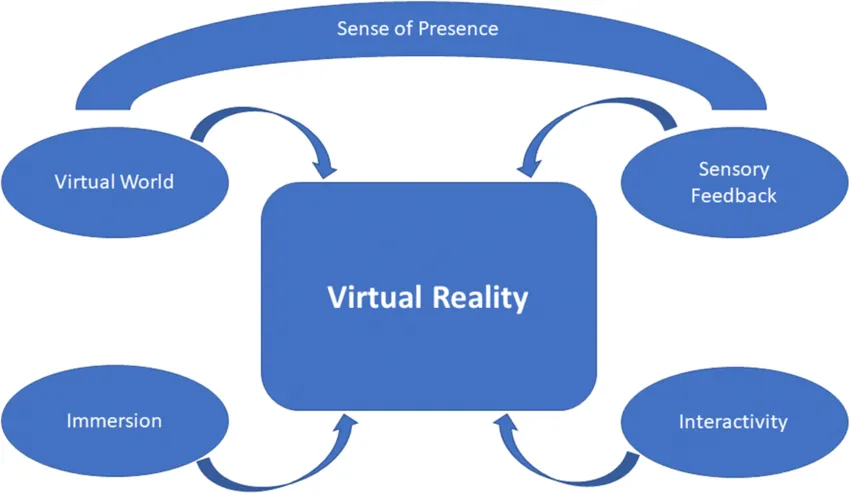
Virtual reality is an important branch of simulation technology. It combines simulation methods with computer graphics, human-computer interface technology, multimedia, sensors, and networking, among other fields, making it a challenging interdisciplinary research area. VR mainly involves the simulated environment, perception, natural interaction, and sensing devices. The simulated environment consists of computer-generated, real-time, dynamic, three-dimensional realistic images. Perception refers to the ideal VR system having the full range of human senses: beyond the visual information produced by computer graphics, there are also auditory, tactile, force, and motion senses, and potentially smell and taste, collectively referred to as multisensory perception. Natural interaction means that human head movements, eye movements, gestures, or other body actions are tracked and processed by the computer so that the system can respond to the participant's actions in real time and feed back to the user's senses. Sensing devices refer to the three-dimensional interaction hardware used for these interactions.
History
The evolution of virtual reality can be divided roughly into four stages. The first stage, before 1963, involved audio-visual dynamic simulation that contained early VR ideas. The second stage, 1963–1972, was the germination period for VR. The third stage, 1973–1989, saw the emergence of VR concepts and preliminary theoretical formation. The fourth stage, 1990–2004, involved further refinement of VR theory and expanded applications.
Characteristics
Multisensory perception
Beyond the visual perception typical of general computers, VR aims to provide auditory, tactile, motion, and potentially gustatory and olfactory perception. An ideal VR system should support the full range of human sensory functions.
Sense of presence
The sense of presence refers to how convincingly a user feels they are the protagonist within the simulated environment. An ideal simulation should be realistic enough that users find it difficult to distinguish it from reality.
Interactivity
Interactivity describes the degree to which users can manipulate objects within the simulated environment and the naturalness of the feedback they receive from that environment.
Autonomy
Autonomy refers to the extent to which objects in the virtual environment behave according to the physical motion laws of the real world.
Key Technologies
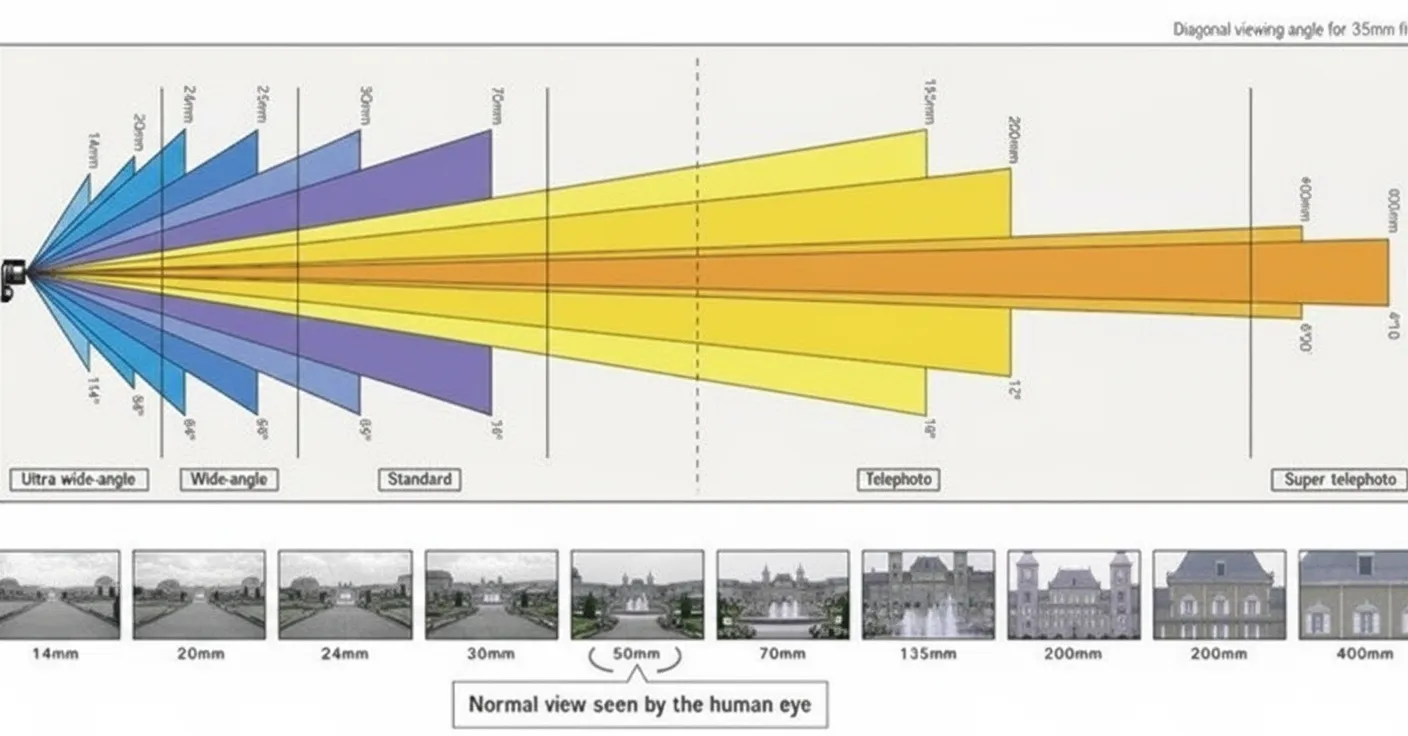
VR integrates multiple technologies, including real-time 3D computer graphics, wide-angle stereoscopic display technology, head/eye/hand tracking, haptic/force feedback, stereo audio, network transmission, and speech input/output. The following sections outline these technologies.
Real-time 3D computer graphics
Generating graphical images from computer models is not inherently difficult if the model is accurate and time is abundant. However, the challenge in VR is real-time performance. For example, in flight simulators, image refresh rate and image quality are both critical, and the complexity of virtual environments makes meeting these requirements difficult.
VR display
When humans view the world, the different positions of the two eyes produce slightly different images that the brain fuses into a single perception containing depth information. Depth can also be inferred from other cues such as eye accommodation and relative object size. Binocular stereopsis plays an important role in VR systems. The images seen by the two eyes are produced separately and shown on separate displays. Some systems use a single display and special glasses so that one eye sees odd frames and the other sees even frames; the differences between odd and even frames create parallax and thus a stereoscopic effect.
User head and eye tracking
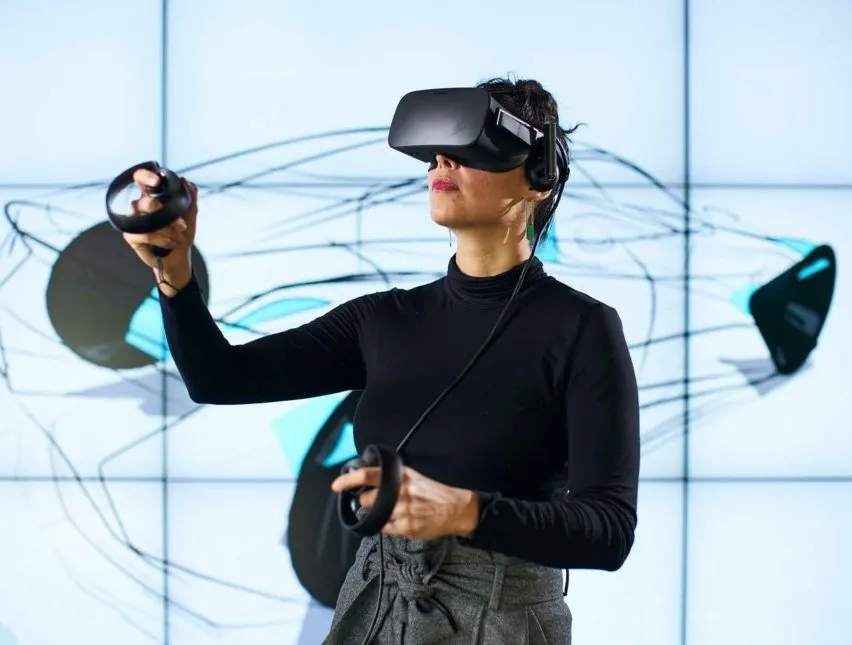
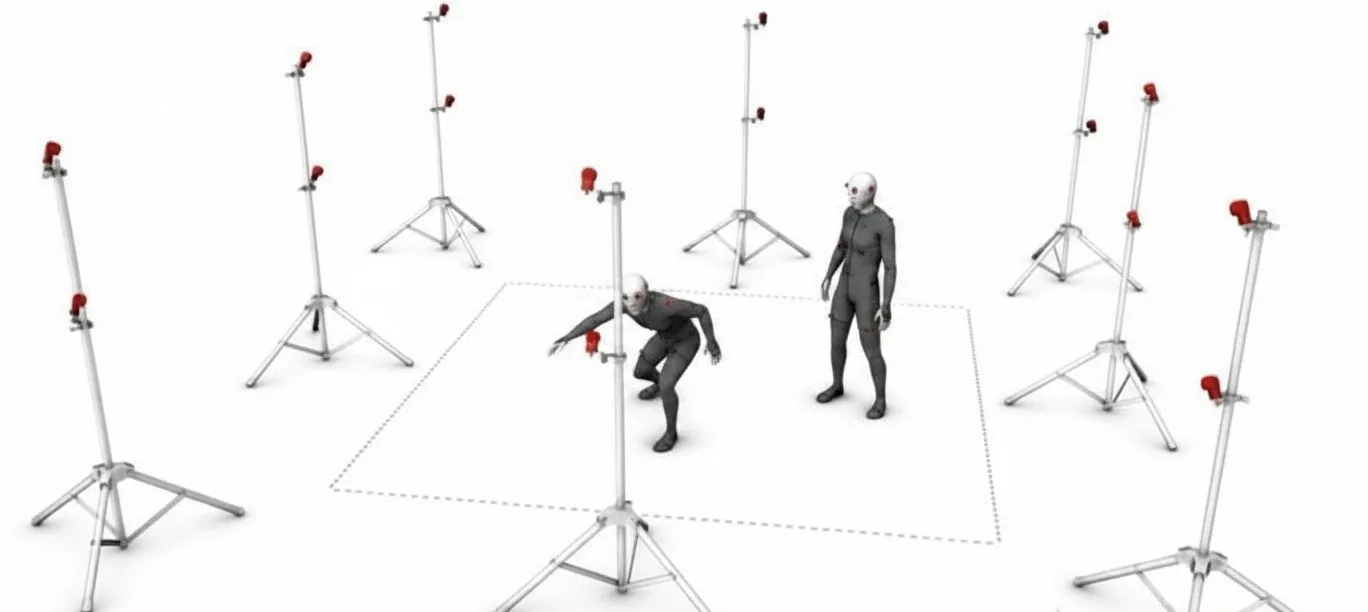
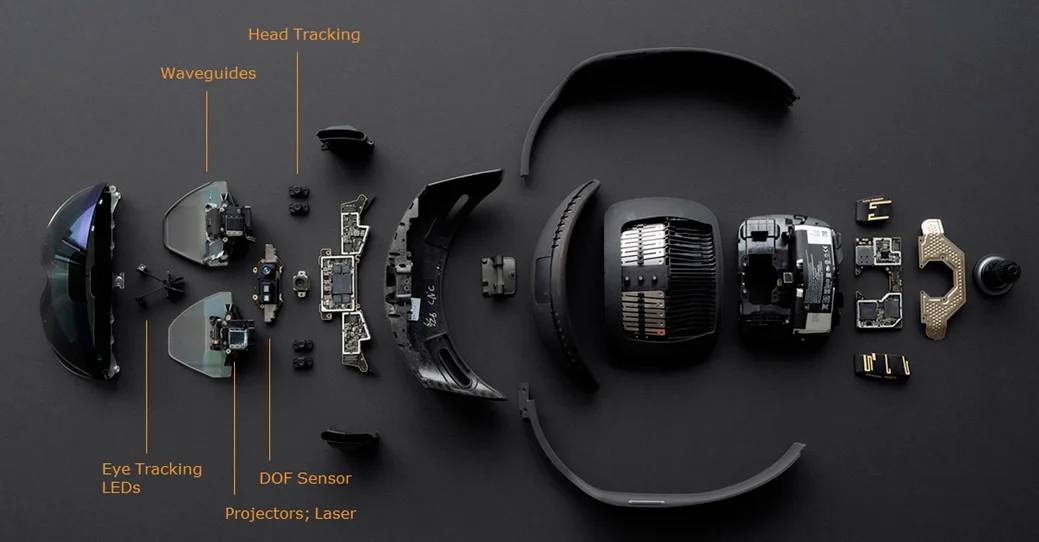
In an artificial environment, every object has a position and orientation relative to the system coordinate frame, and the user is the same. The scene the user sees is determined by the user's position and the direction of the head and eyes. Head-tracking head-mounted displays allow the view to change with head movement. In traditional computer graphics, viewpoint change is accomplished via mouse or keyboard, separating the visual system from motion perception. Head tracking links visual and motion perception, producing a more realistic feeling. Another advantage is that users can explore an environment not only with binocular stereopsis but also by moving their heads.
In human-computer interaction, keyboard and mouse are common tools but are not well suited to six-degree-of-freedom 3D space. Devices that provide six degrees of freedom include digitizers and SpaceBall devices. Other high-performance devices include data gloves and data suits.
VR audio
Humans can accurately localize sound sources. In the horizontal plane, sound direction is inferred from phase and intensity differences because the sound arrives at the two ears at different times or distances. Stereophonic effects rely on different recordings for the left and right ears to create a sense of direction. In real life, turning the head changes perceived sound direction. Many VR systems do not yet couple audio direction with head motion.
Haptic feedback
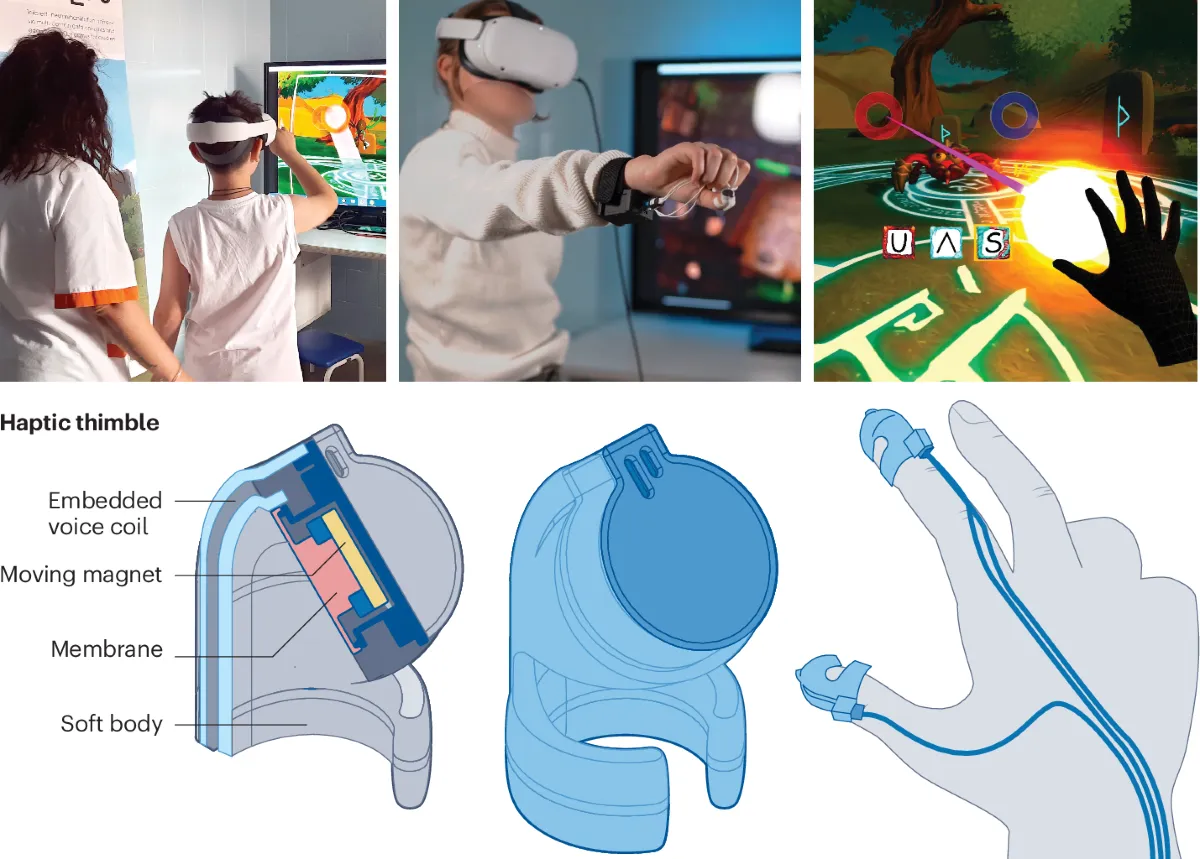
In a VR system, a user may see a virtual cup and attempt to grasp it, but without true tactile feedback the hand may pass through the virtual surface. A common solution is to fit the inside of a glove with vibrating contact points to simulate touch sensations.
Speech
Speech input and output are important for VR systems that need to understand natural language and interact with users in real time. Speech recognition is difficult because speech signals and natural language are complex and variable. In continuous speech there are no clear pauses between words, pronunciations vary with context, and the same word can sound different across speakers or depending on psychological, physiological, and environmental factors.
Using natural language as computer input raises two main issues: efficiency and accuracy. To be understood by a computer, speech input may need to be verbose, and current computer understanding relies on pattern matching rather than human-like intelligence.
Art and Technical Features
VR art emerged alongside the development of virtual reality and related technologies. It refers to art forms that use virtual reality, augmented reality, and related technologies as media. VR art is characterized by hypertextuality and interactivity. As a synthesis of modern technological frontiers, VR art provides a new artistic language for visualizing and interacting with complex data via human-computer interfaces. Its appeal to artists lies in the close integration of artistic thinking and technological tools, producing novel cognitive experiences. Compared with traditional windowed new media art, VR art's interactivity and extended human-computer dialogue are key advantages. Fundamentally, VR art is an interactive form based on new modes of human-computer dialogue, with its primary strength in constructing dialogues between works and participants and revealing the process of meaning generation through those dialogues.
By applying VR and AR technologies, artists can use more natural human-computer interaction methods to control form, create more immersive environments, and realize scenarios not possible in reality. Interaction systems can provide multi-sensory channels and traversal processes, and software-hardware integration can facilitate communication and feedback between participants and works. Motion capture through video interfaces can store visitors' behavior fragments for playback and enhancement. Augmented reality and mixed reality formats combine digital and real worlds, allowing viewers to control projected text through their movements. Data gloves can provide force feedback, movable scenes and 360-degree rotating spaces enhance immersion, allow viewers to enter and manipulate works, and can enable participants to contribute to re-creation.
Applications of Virtual Reality Technology
VR in Medicine
VR has significant applications in medicine. Virtual human models can be built in simulated environments, and with tracking spheres, head-mounted displays, and haptic gloves, students can easily learn internal anatomical structures more effectively than from textbooks. In the early 1990s, researchers built a virtual surgical trainer based on two SGI workstations for leg and abdominal surgery simulation. The virtual environment included an operating table and lamp, surgical instruments (such as scalpels, syringes, and forceps), and virtual human models and organs. Using HMD and haptic gloves, users could perform simulated surgery on the virtual models. Such systems still require improvements in realism and network functionality to support multiuser training or remote expert guidance. VR is also important for predicting surgical outcomes, improving life quality for people with disabilities, and aiding new drug development.
In medical schools, students can perform virtual dissections and surgical practice in virtual laboratories. Because training is not constrained by specimen availability or physical space, training costs can be greatly reduced. High-fidelity virtual reality systems for medical training, practice, and research offer advantages that are difficult to match by traditional methods. Examples include catheter insertion simulators that allow repeated practice and ophthalmic surgery simulators that generate three-dimensional images of anterior eye structures with real-time haptic feedback so students can observe procedures such as lens removal and study the vasculature, iris, scleral tissue, and corneal transparency. Other examples include anesthesia VR systems and oral surgery simulators.
Surgeons can use VR to repeatedly simulate procedures on a display before operating, manipulate virtual organs to find optimal approaches, and improve proficiency. VR is valuable for remote-controlled surgery planning, scheduling complex procedures, providing information guidance during operations, predicting surgical outcomes, improving rehabilitation and assistive strategies for disabled patients, and supporting new drug research and development.