ALLPCB


Overview
Wearability is an inherent advantage of wearable devices. In healthcare applications, wearables can perform 24-hour continuous monitoring, significantly reducing the communication burden between clinicians and patients. Based on this capability, a one-stop medical service model that collects information, uploads data in real time, applies algorithms for analysis, generates charts, and then provides health guidance has attracted considerable startup activity in recent years.
From Consumer Features to Medical Measurements
Many wearable products began with motivational features such as heart-rate monitoring and step counting, and have progressively expanded to collect physiological indicators such as body weight, blood pressure, blood glucose, heart rate, sleep, and electrodermal activity. These devices typically rely on cloud services for monitoring, real-time data analysis, and feedback to users or clinicians, incrementally moving toward core medical services.
Accuracy Versus Miniaturization
Even well-known products still struggle to meet clinical expectations. Balancing measurement accuracy with small form factor is a major obstacle across smart wearables.
Take ambulatory electrocardiography commonly used by cardiovascular patients as an example. Such monitoring typically requires at least two measurement points on the body: one electrode on the chest and another cuff on the arm. Continuous cardiovascular monitoring outside a clinical setting is highly valuable for these patients, but integrating an ambulatory ECG into a wristband-sized device is nearly unfeasible.
Essential Components and Size Constraints
To build a functional smart wearable, sensors, a battery, and an electronic controller are all required. These components must be small enough to be integrated into devices measured in centimeters, and additional personalized elements are sometimes needed as well. Wearables demand strict portability and wearing comfort, which intensifies the trade-off between volume and functionality.
Battery, Sensors, and Materials
Achieving minimal size and low power consumption depends largely on the battery. Smaller batteries with higher energy density remain a central need for all compact smart devices. Sensors are another competitive area: more stable signal acquisition and lower power consumption are the most important development directions, and progress depends on advances in materials science.
Graphene and Emerging Sensor Designs
Graphene has attracted attention for its toughness, high optical transmittance, and good conductivity, and it shows promise in both batteries and sensors. For example, a team led by Dae-Hyeong Kim at Seoul National University combined properties of graphene and gold to develop a graphene wristband that can monitor and regulate blood glucose. The research was published in Nature Nanotechnology in March 2016. The device integrates real-time monitoring with a drug-delivery function.
When worn, the graphene sensor analyzes skin temperature and humidity along with sweat pH and glucose concentration to estimate blood glucose. If elevated glucose is detected, a heater in the therapeutic region activates micro-needles by melting the membrane of a drug reservoir. A micro-needle containing an antihyperglycemic agent penetrates the superficial skin to control glucose levels immediately, and the membrane stops melting at the appropriate time to avoid overdosing.
Market Response and Device Forms
Such real-time, intelligently regulated wearables align with clinical needs for chronic disease management, but overall market response to medical wearables remains mixed.
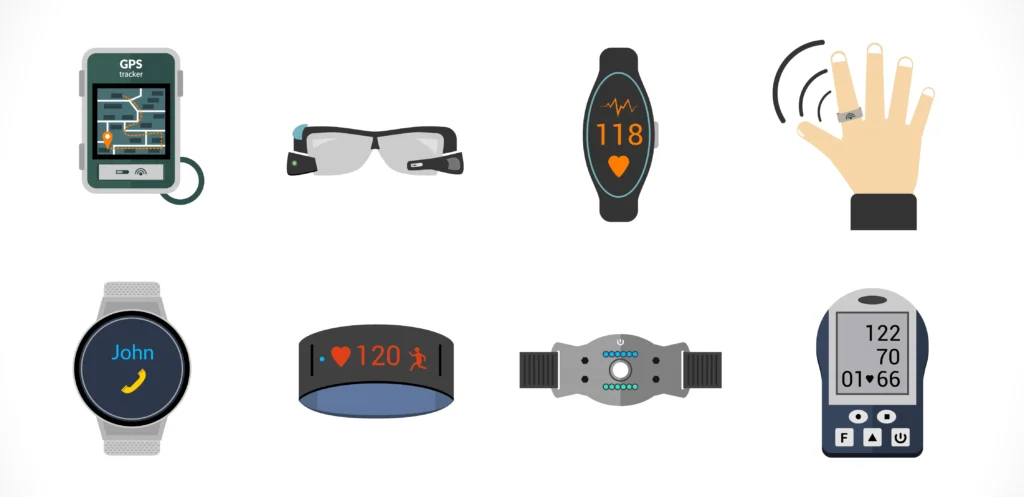
Industry observers note that wristbands, as the form factor that first reached consumers, limit imagination about possible wearable formats. Smart patches, smart glasses, smart garments, and even implantable wearables are expected to be important future directions. With new materials emerging, market research firm Gartner projected in February that global spending on medical and health-related wearables would reach $13.7 billion by 2020.
Future Challenges
Researchers are prototyping a variety of medical monitoring devices to reduce time spent by patients and clinicians on basic data exchange. However, materials science, energy harvesting, and component miniaturization remain major constraints. Implantable wearables will face additional challenges such as immune rejection, power replenishment and replacement, and ethical concerns. As solutions are found for each link in this chain, medical wearables will progressively approach clinically useful forms.