ALLPCB


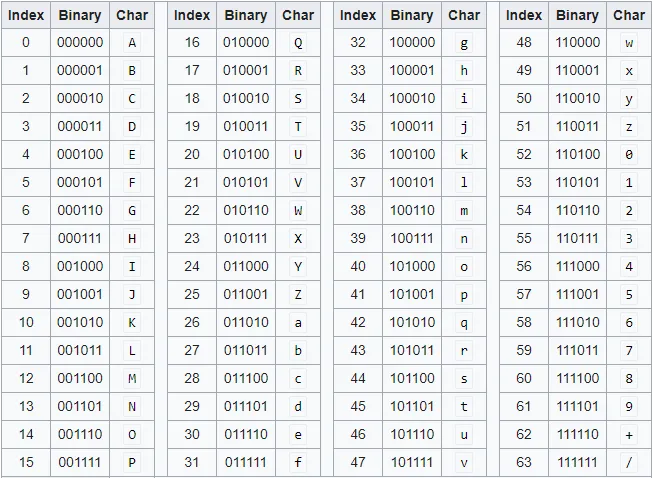
Overview
Base64 is an encoding method that converts binary data into ASCII characters. It uses 64 distinct characters to represent arbitrary binary data, typically used to transmit or store binary data in text-based protocols.
How Base64 Works
Base64 divides the input data into fixed-length blocks, usually 3 bytes, and converts each block into 4 Base64 characters. The character set consists of uppercase letters A-Z, lowercase letters a-z, digits 0-9, and two symbols, + and /. The encoded output is a text string composed of these Base64 characters.
Common Use Cases
- Transmitting attachments in email: Some mail systems only support plain text and cannot directly carry binary files. Base64 converts binary files to text for transmission.
- Passing parameters in URLs: Certain binary data or special characters may be misinterpreted in URLs. Base64 ensures the transmitted data consists only of safe ASCII characters.
- Storing binary data: Base64 converts binary data to text strings, making it easier to store and retrieve in text files or databases.
Example in Python
import base64
# Data to encode
data = b'Test Base64 Encoding'
# Encode
encoded_data = base64.b64encode(data)
print("Base64 encoded:", encoded_data.decode())
# Decode
decoded_data = base64.b64decode(encoded_data)
print("Base64 decoded:", decoded_data.decode())
Notes
When performing Base64 encoding and decoding, provide input data in the required format. In the example above, a bytes object is used as input for encoding, and the encoded result is decoded to a string. Specific usage may vary depending on the programming language and library.