ALLPCB


In the world of printed circuit board (PCB) design, achieving electromagnetic compatibility (EMC) is a top priority for engineers. A well-designed ground plane plays a critical role in minimizing electromagnetic interference (EMI), ensuring signal integrity, and maintaining overall circuit performance. But what are the key considerations in ground plane design for PCB EMC? Simply put, it involves creating a low-impedance return path for signals, avoiding ground loops, separating analog and digital grounds where necessary, and optimizing the layout to reduce noise. In this comprehensive guide, we’ll dive deep into these considerations, offering practical tips and insights to help you design PCBs that meet stringent EMC requirements.
Why Ground Plane Design Matters for PCB EMC
A ground plane is a large area of copper on a PCB layer that serves as a common reference point for electrical signals. It acts as a return path for currents, helping to stabilize voltages and reduce noise. When designed poorly, a ground plane can become a source of EMI, leading to signal degradation or failure to meet regulatory standards. Effective ground plane design for PCB EMC ensures that unwanted electromagnetic energy is minimized, protecting sensitive components and preventing interference with nearby devices.
EMC is especially critical in high-speed digital circuits, mixed-signal designs, and applications like automotive or medical electronics, where reliability is non-negotiable. A solid ground plane strategy can mean the difference between a product that passes compliance testing and one that fails. Let’s explore the essential factors to consider when designing ground planes for optimal EMC performance.
1. Providing a Low-Impedance Return Path
One of the primary functions of a ground plane in PCB design is to provide a low-impedance path for return currents. High-frequency signals, such as those operating above 1 MHz, tend to follow the path of least inductance, which is often directly beneath the signal trace. If the ground plane is interrupted or poorly designed, return currents may take longer, unintended paths, creating loops that radiate EMI.
To achieve a low-impedance return path, ensure the ground plane is continuous and unbroken beneath high-speed signal traces. Avoid splitting the ground plane unnecessarily, as gaps can force currents to detour, increasing inductance and noise. For multilayer PCBs, dedicate an entire layer to the ground plane to minimize impedance. Studies show that a solid ground plane can reduce loop inductance by up to 50% compared to a fragmented one, significantly improving EMC performance.
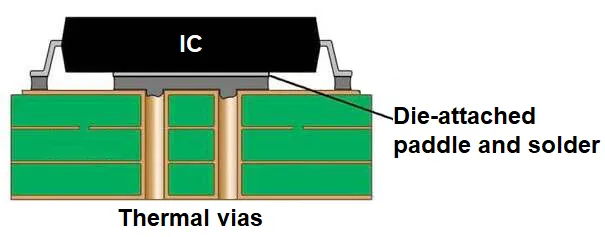
Tip: Place vias strategically near high-speed components to connect signal layers to the ground plane, ensuring return currents have a short, direct path. A via spacing of less than 1/20th of the signal’s wavelength (e.g., 7.5 mm for a 2 GHz signal) can help maintain low impedance.
2. Avoiding Ground Loops
Ground loops occur when return currents have multiple paths to ground, creating a loop that acts like an antenna and radiates EMI. This is a common issue in PCB designs with poor grounding schemes, especially in systems with multiple power supplies or grounding points. Ground loops can introduce noise into sensitive circuits, degrading performance and violating EMC standards.
To prevent ground loops, use a single-point grounding approach where possible, connecting all ground references to a common point. In larger systems, a star grounding topology can be effective, where each subsection of the circuit connects to a central ground node. Additionally, ensure that the ground plane is not split into isolated islands unless absolutely necessary, as this can create unintended loops.
3. Separating Analog and Digital Grounds
In mixed-signal designs, combining analog and digital circuits on the same PCB can lead to noise coupling if the grounding is not handled carefully. Digital circuits often generate high-frequency noise due to switching activities, which can interfere with sensitive analog signals. A key consideration in ground plane design for PCB EMC is whether to split the ground plane into separate analog and digital sections.
While splitting grounds can reduce noise coupling, it must be done with caution. Completely isolated ground planes can create return path issues and increase EMI if not connected properly. A better approach is to use a single ground plane but partition it into analog and digital regions, connecting them at a single point near the power supply or ADC (analog-to-digital converter). This minimizes interference while maintaining a unified reference point.
For example, in a design with a 12-bit ADC operating at 100 kSPS (kilosamples per second), placing digital components like microcontrollers on one side of the board and analog components like amplifiers on the other, with a single-point ground connection, can reduce noise by up to 30 dB.
4. Optimizing Ground Plane Placement in Multilayer PCBs
In multilayer PCBs, the placement of the ground plane is crucial for EMC. Positioning the ground plane adjacent to signal layers helps to control impedance and reduce crosstalk between traces. For a four-layer board, a common stack-up is signal-ground-power-signal, where the ground plane acts as a shield between signal layers and provides a low-impedance return path.
Ensure that the ground plane layer is as close as possible to the signal layer to minimize the loop area for return currents. A separation of 0.1 mm to 0.2 mm between signal and ground layers can reduce loop inductance significantly, cutting EMI emissions by up to 10 dB at frequencies above 100 MHz. Additionally, avoid routing high-speed signals across multiple layers without nearby ground vias, as this can disrupt the return path and increase noise.
5. Decoupling Capacitors and Ground Plane Interaction
Decoupling capacitors are essential for filtering noise and stabilizing power delivery in PCB designs, but their effectiveness depends on proper placement relative to the ground plane. These capacitors work by providing a local source of charge to suppress voltage spikes caused by switching components, such as microcontrollers or FPGAs.
For optimal performance, place decoupling capacitors as close as possible to the power pins of ICs, with short connections to the ground plane. Use vias to connect the capacitor’s ground pad directly to the ground plane, minimizing inductance. A typical value for decoupling capacitors in high-speed designs is 0.1 μF, with a placement distance of less than 3 mm from the IC pin to ensure low impedance at frequencies up to 100 MHz.
Poor placement or long traces to the ground plane can introduce parasitic inductance, reducing the capacitor’s effectiveness and increasing EMI. A well-designed ground plane ensures that decoupling capacitors can do their job, keeping noise levels low and maintaining EMC compliance.
6. Minimizing Slots and Cuts in the Ground Plane
Slots, cuts, or gaps in the ground plane can disrupt the flow of return currents, forcing them to take longer paths and creating EMI hotspots. These interruptions often occur due to improper routing of traces or the placement of components that split the ground plane. For EMC, it’s vital to keep the ground plane as continuous as possible.
If cuts are unavoidable, such as for isolating noisy components, use narrow slots and ensure that return paths are rerouted using vias or bridges. For instance, in a design with a high-current switching regulator, a small slot in the ground plane might be necessary to prevent noise from spreading. However, adding a ground stitch via every 5 mm along the slot can help maintain a low-impedance path and reduce EMI by up to 15 dB at critical frequencies.
7. Ground Plane Edge Effects and Shielding
The edges of a ground plane can act as radiators if not handled properly, especially in high-frequency designs. Currents flowing near the edge of the plane can create fringing fields, contributing to EMI. To mitigate this, extend the ground plane slightly beyond the signal traces, typically by 1-2 mm, to contain these fields.
Additionally, consider using ground stitching vias along the PCB edges to connect ground planes on multiple layers, creating a Faraday cage-like effect that enhances shielding. This technique is particularly effective in reducing radiated emissions in designs operating above 500 MHz, where edge effects become more pronounced.
8. Testing and Validating Ground Plane Design for EMC
After designing the ground plane, validation through testing is essential to ensure EMC compliance. Use tools like near-field probes to identify EMI hotspots on the PCB, particularly around high-speed components or areas with ground plane interruptions. Conduct pre-compliance testing in an anechoic chamber to measure radiated emissions and compare them against standards like CISPR or FCC limits.
Simulation software can also predict potential EMC issues before fabrication. Tools that model electromagnetic fields can help visualize return current paths and identify areas where the ground plane design may need adjustment. For example, simulations might reveal that a ground plane split increases loop area by 20%, prompting a redesign to improve performance.
Common Mistakes to Avoid in Ground Plane Design
Even experienced engineers can make mistakes in ground plane design that compromise EMC. Here are a few pitfalls to watch out for:
- Over-Splitting Ground Planes: Excessive splitting without proper connection points can lead to isolated ground islands, increasing noise and EMI.
- Ignoring High-Speed Signal Routing: Routing high-speed traces over gaps in the ground plane disrupts return paths, causing significant EMI.
- Poor Via Placement: Placing vias too far from components or signal transitions increases inductance, reducing the effectiveness of the ground plane.
By paying attention to these details, you can avoid costly redesigns and ensure your PCB meets EMC requirements on the first try.
Conclusion: Mastering Ground Plane Design for PCB EMC
Designing a ground plane for PCB EMC is a balancing act that requires careful attention to return paths, noise isolation, and layout optimization. By focusing on low-impedance paths, avoiding ground loops, strategically separating analog and digital grounds, and minimizing disruptions in the ground plane, you can significantly reduce EMI and improve overall circuit performance. Whether you’re working on a high-speed digital board or a sensitive mixed-signal design, these key considerations in ground plane design for PCB EMC will help you achieve compliance and reliability.
Implementing these strategies not only enhances signal integrity but also saves time and resources during testing and certification. A well-thought-out ground plane is the foundation of any EMC-compliant PCB, ensuring your design performs as intended in real-world conditions. Keep these principles in mind during your next project to build robust, interference-free circuits that stand the test of time.