ALLPCB


Background
With the rapid development of power systems and advances in computer and communication technologies, relay protection technology faces further evolution. Its development is expected to include conceptual breakthroughs and application changes as the field moves from the digital age into an information-driven era. Relay protection has developed alongside power systems and is closely related to increasing requirements for operational reliability. The emergence of microprocessor-based protection has made substation automation and unmanned operation practical.
Smart Grid Characteristics
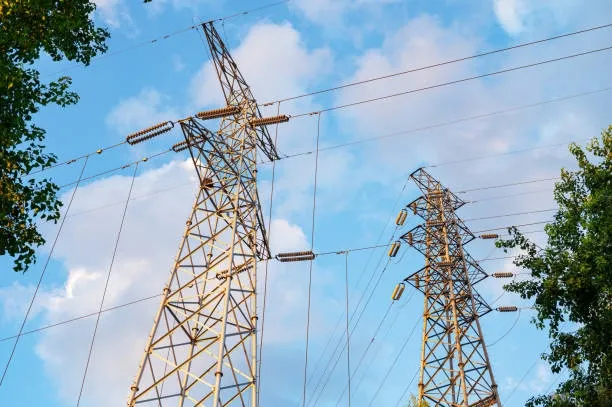
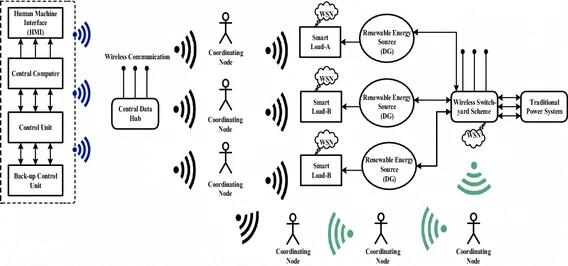
A smart grid is built on the physical power grid and makes extensive use of advanced sensing and measurement, communication, information, computing, control, and renewable energy technologies to interconnect generation, transmission, distribution, and consumption into a highly automated network. Relay protection, as the first line of defense for power system security and stability, cannot be designed and configured according to traditional grid assumptions. The technical characteristics of smart grids affect how existing relay protection is applied.
Digitalization and Instrument Transformers
One important feature of smart grids is digitalization. For relay protection, this includes: (1) digital measurement methods, with widespread use of electronic instrument transformers and digital interfaces; and (2) digital information transmission, where traditional analog cables for measurements and status signals are replaced by digital transmission over fiber-optic networks. Electronic instrument transformers use optoelectronic conversion for measurement. They are compact and have good insulation. Their main advantages for protection are wide bandwidth and improved transient performance, without the measurement errors and transient characteristics associated with electromagnetic instrument transformers and capacitive voltage transformers. They can transmit power system operating signals effectively to the secondary side. As smart grid deployment and intelligent instruments and devices increase, traditional instrument transformers will be gradually phased out. Electronic instrument transformers adopt network interfaces and connect to protection devices and intelligent circuit breakers over the network, greatly simplifying secondary wiring and easing maintenance.
Main Factors Affecting Relay Protection in Smart Grids
- Grid complexity: Smart grid architectures are more complex and include diverse generation and load types and scales. This complexity makes device selection and parameter setting for relay protection more challenging.
- Reliability concerns: Especially after distributed generation integration, power quality, stability, and reliability can be affected, which may degrade relay protection performance metrics such as response speed.
- Nonlinear loads: The higher proportion of nonlinear loads in smart grids, driven in part by distributed generation, changes power quality and can impact relay protection operation.
- Security risks: Communication and control systems in smart grids face higher cybersecurity risks. Network attacks and similar threats can affect relay protection accuracy and signal transmission.
- Operational monitoring requirements: Smart grids require more accurate and real-time monitoring of system status, which demands higher precision and timeliness from protection devices and systems.
Conclusion
Factors affecting relay protection in smart grids are more complex than in traditional power systems. Protection equipment and systems must provide higher accuracy, robustness, and reliability to cope with evolving and varied operating conditions and to ensure stable, reliable grid operation. Strengthening security measures is also necessary to improve the overall resilience of relay protection systems against network-based threats.