ALLPCB


Overview
With the arrival of 5G, wireless communication peak data rates have risen to the order of 20 Gbit/s and latency can theoretically drop to 1 ms. This improvement should remove current AR/VR data-transmission barriers and significantly improve user experience, helping the AR/VR market mature and develop.
Definitions
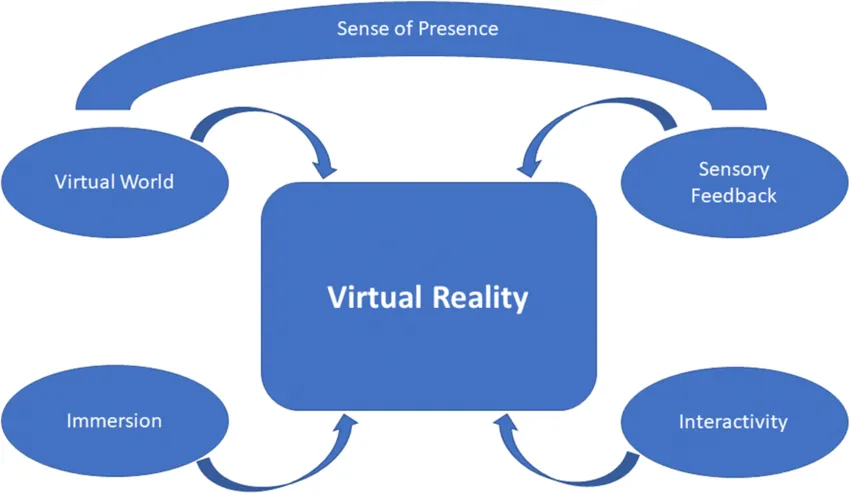
VR, or virtual reality, is a computer simulation system that creates and enables users to experience virtual worlds. AR, or augmented reality, is a technology that computes a camera image's position and angle in real time and overlays corresponding images. The VR/AR industry spans hardware manufacturers, system developers, content providers, and content platforms.
Market Forecasts
Greenlight predicts the global virtual reality industry will exceed 200 billion yuan in 2020, with the VR market at 160 billion yuan and the AR market at 45 billion yuan. In terms of unit shipments, IDC predicts total terminal shipments (AR+VR) will approach 40 million units in 2020.
Industry Chain Structure
The VR/AR industry chain is broadly similar to that of smartphones, including hardware, software, content creation and distribution, and applications and services. The main difference is that smartphone applications are primarily consumer-oriented, while VR/AR also penetrate many industry applications beyond individual consumers, making the application segment considerably more complex.
Upstream in the VR/AR supply chain are manufacturers that produce hardware for content creation, provide solutions, and supply hardware production and software development for device integration. Hardware accounts for more than half of VR/AR device costs.
Hardware and Software Components
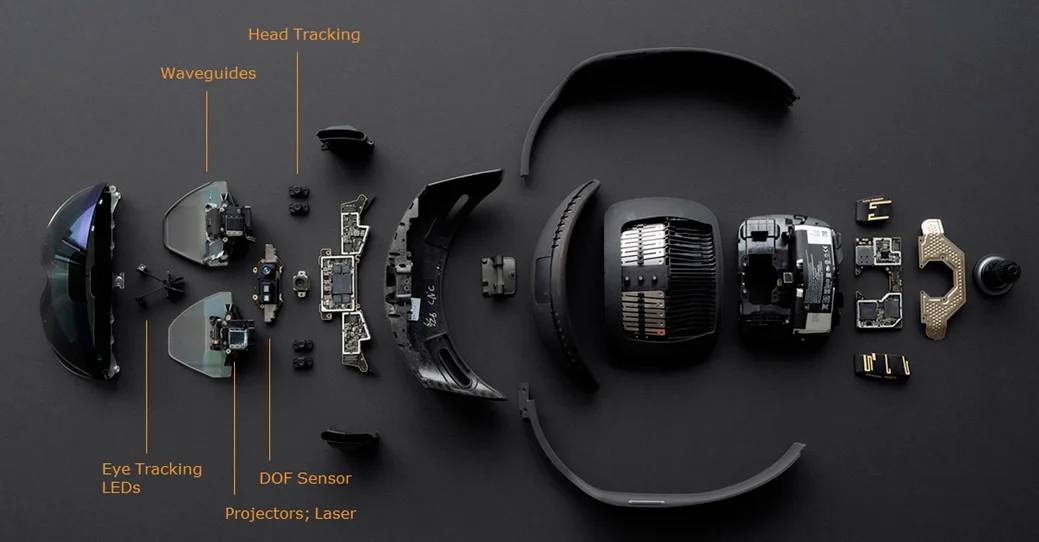
AR hardware faces higher technical barriers, mainly including optical systems, display devices, chips, and sensors. The software side includes data acquisition (environment rendering, video capture, SLAM), data processing (3D rendering, rendering engines), and system platforms (operating systems, SDKs).
Because hardware benefits from early scale advantages in the supply chain, it can open the market quickly in the early stages. By analogy with the dynamic evolution of the smart device market structure, as the ecosystem matures, segments such as AR data, consumer, and entertainment applications will gradually increase their share.
AR uses visual information as the interaction medium, so 3D imaging is central to input. 3D imaging cameras differ significantly from 2D cameras. Opportunities from 3D imaging will continue to grow compared with 2D imaging, significantly raising supply chain value and altering value distribution, benefiting infrared component manufacturers with higher revenue elasticity.
Midstream and Downstream
Midstream in the supply chain are module and assembly manufacturers, including 3D sensing, processor modules, imaging, and other modules.
Downstream are AR terminal products and services for AR applications. Application content includes games, consumer apps, enterprise apps, healthcare, and education. As downstream application scenarios expand, market space is expected to grow further.
Device Trends
New VR products continue to be launched and hardware technology is relatively mature. Over the past year, Facebook released the Oculus Rift S and the standalone Oculus Quest, and HTC released the new Vive Cosmos. New entrants such as Valve and Huawei also released their first VR devices in the second half of 2019.
From devices released in the past year, tethered systems remain the mainstream solution, but strong sales of the Oculus Quest have opened the standalone market, and standalone VR models are expected to increase.
How 5G Affects AR/VR
With 5G, AR/VR are expected to be among the first segments to see rapid growth and to gradually drive other applications. 5G's ultra-broadband high-speed transmission and low latency can address pain points such as insufficient rendering capability, weak interaction, poor terminal mobility, and motion sickness.
In AR adoption, 5G's advantages are mainly higher capacity, lower latency, and better network uniformity. When network latency falls to the millisecond level, discomfort caused by a mismatch between motion and the visual system will disappear. Thus, commercial 5G networks will remove transmission barriers for AR and help resolve issues that have hindered AR on mobile devices. As the AR/VR ecosystem matures, it will gain new development opportunities alongside 5G.