ALLPCB


This article is the third installment of a three-part series, "Optical heart-rate sensors for biometric wearables." Part one covered the sensors' working principles and measurement methods. Part two shared ten lessons learned from more than 50 biometric wearable product development cycles.
In an increasingly digital world, optical heart-rate sensors are becoming more common in wearable devices. These sensors support a wide range of applications, from tracking personal activity and fitness to monitoring health status. Accurate biometric sensor data enables reliable fitness and health assessments, but what can designers and engineers do with those assessments? Table 1 summarizes several common evaluations used in fitness applications and highlights their relevance to health and medical use.
| Assessment | Definition | Fitness significance | Health significance |
|---|---|---|---|
| VO2 max | Aerobic capacity: a primary indicator of chronic cardiovascular condition | Higher VO2 max corresponds to better performance in aerobic exercise | Higher VO2 max is associated with lower mortality and better cardiac rehabilitation outcomes |
| Resting heart rate | Heart rate while awake and not exercising | Decreases in resting heart rate are associated with improved fitness | Steady increases in resting heart rate are associated with progression of cardiovascular disease |
| Heart rate recovery | Change in heart rate within one minute after intense exercise | Higher heart rate recovery indicates better endurance | Higher heart rate recovery indicates improved cardiovascular health |
| Heart rate response | Change in heart rate within one minute after the start of exercise | Higher heart rate response may indicate insufficient cardiac preparation during exercise | Higher heart rate response, combined with impaired chronotropic function, can predict carotid atherosclerosis |
| Cardiac efficiency | Average heart rate divided by average heart rate at steady state | Higher cardiac efficiency means fewer heartbeats are required for any given activity | Steady declines in cardiac efficiency are associated with onset of hypertension |
| Heart rate variability (HRV) | Statistical variability of intervals between heartbeats | HRV can indicate psychosocial stress and exercise overtraining | HRV can predict atrial fibrillation and arrhythmias |
Table 1: Key health assessments related to fitness and medical use (information from the U.S. National Institutes of Health)
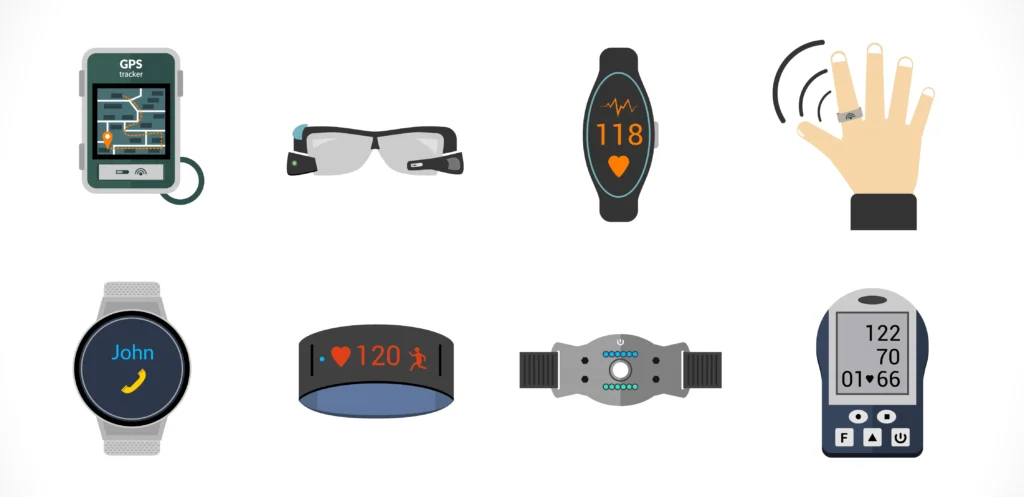
Most wearables on the market today are positioned for sports and fitness use, but wearables are beginning to transition toward personal health devices that provide meaningful health guidance. This shift is possible because photoplethysmography (PPG) sensors in many wearables have reached sufficient accuracy to support several health and medical use cases that have previously been validated by electrocardiography.
Below are examples of how these assessments can be used now and how they may be applied to health and medical wearables in the future.
VO2 max
Measuring physical activity and the body's responses to it is essential for determining improvement. Some wearables now estimate VO2 max to track chronic changes in cardiovascular health. Higher VO2 max corresponds to better aerobic performance. Devices that estimate VO2 max can also serve health and clinical purposes, since evidence links higher VO2 max with reduced mortality risk and improved recovery after cardiac events.
Resting heart rate
Although "rest" may not be the first concept people think of when considering fitness, resting heart rate is a strong indicator of health. When not exercising, reductions in resting heart rate are associated with increased fitness. A lower resting heart rate generally indicates a lower risk of cardiovascular disease progression.
Heart rate recovery
Measuring heart rate recovery—the heart's ability to return to baseline after exercise—also predicts fitness and cardiac function. A healthy heart recovers faster than an unhealthy one. Higher heart rate recovery indicates greater endurance and better cardiovascular health. To assess recovery, compare heart rate during exercise and one to two minutes after stopping.
Heart rate response
Another useful metric from heart-rate sensors is heart rate response, measured roughly one minute after exercise begins. This reflects physiological activation: increased muscular work raises sympathetic nervous system activity. Lower fitness levels are associated with stronger heart rate responses. With regular training, the body adapts: while heart rate still increases with exertion, greater effort is required to reach the same speed. Elevated heart rate response, together with impaired chronotropic function, can help predict carotid disease.
Cardiac efficiency
Regular exercise improves cardiac efficiency, the ratio between cardiac work performed and energy expended. Higher cardiac efficiency means fewer heartbeats are required for a given activity. Cardiac efficiency is a key cardiac health metric. Declines in efficiency are associated with cardiovascular diseases including hypertension.
Heart rate variability (HRV)
HRV measures timing variations between heartbeats and can assess physiological stress from activity or other stressors. It can indicate psychosocial or mental stress and exercise overtraining. HRV monitoring links stressors to fatigue and readiness for cognitive or physical tasks. HRV is also predictive of arrhythmias and atrial fibrillation. While HRV monitoring has long been used by professional athletes, it is only now becoming common in consumer devices.