ALLPCB


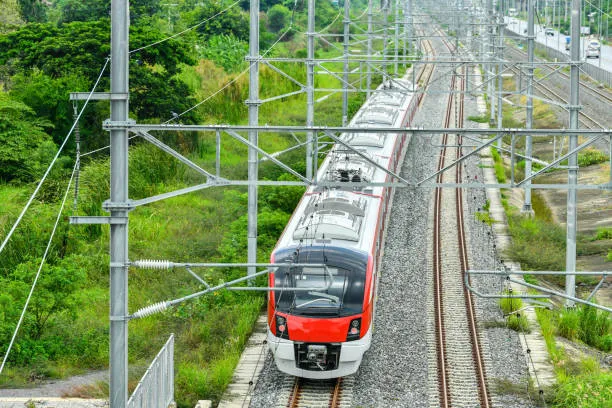
Recently, the Ministry of Industry and Information Technology (MIIT) approved trial frequencies for 5G-R for China State Railway Group Co., Ltd. This decision has attracted broad industry attention.
What is 5G-R?
5G-R stands for 5G-Railway. In the approval documents, 5G-R is described as a "next-generation railway mobile communication system based on 5G technology." In simple terms, 5G-R is the application of 5G technology to the railway transportation sector.
Some readers may ask: is 5G-R intended for passenger internet access? The answer is no. 5G-R is a private network communication system. It is a dedicated 5G network for China State Railway Group, designed to meet railway operational and management communication needs. Passenger internet access is provided by public networks operated by mobile carriers such as China Mobile, China Telecom, and China Unicom.
These two systems are completely separate and isolated; terminals are not interchangeable. For this reason, 5G-R requires a dedicated spectrum allocation and independent network construction.
The working frequency chosen for 5G-R in the Chinese market is in the 2100 MHz band: uplink 1965–1975 MHz, downlink 2155–2165 MHz, each 10 MHz, using FDD.
Railway private network communication: application scenarios
Rail transport is a typical mobile communication scenario with strong demands on wireless communication technology. Whether high-speed trains or conventional services, passenger or freight, trains must maintain close contact with stations and control centers to ensure safe operation.
Railway private wireless communication can be summarized into the following application scenarios:
- Line-side train-to-ground communication
- Railway stations and hubs
- Railway corridor infrastructure
- Onboard vehicle internal communication
What is GSM-R?
GSM-R is the predecessor of 5G-R. As the name implies, GSM-R is a railway-specific wireless communication system based on GSM technology. In the early 1990s, when the GSM standard was being finalized, Siemens began preparing and drafting GSM-R technical specifications. Compared with the standard GSM, GSM-R adds functions specific to railway dispatch communication.
After GSM-R emerged in Europe in the 1990s, China studied and adopted the technology. In 2004, to meet the needs of the CTCS-3 train control system for high-speed rail, the Ministry of Railways officially adopted the GSM-R standard as the national standard for the new generation of railway wireless communication.
Notably, China was the first country in Asia to develop GSM-R. The first railway in the Chinese market to apply GSM-R was the Qinghai–Tibet Railway.
The GSM-R deployment in the Chinese market used the 900 MHz "golden band" sourced from China Mobile: uplink 885–889 MHz, downlink 930–934 MHz, 2×4 MHz bandwidth, with maximum coverage distances up to 6–9 km. Since 2008, almost all newly built or upgraded railways have adopted GSM-R as the dedicated wireless communication system.
Why move from GSM-R to 5G-R?
GSM-R is based on 2G technology and can no longer meet the requirements of modern railways. GSM-R focuses on voice services, has low spectral efficiency, and narrowband data bandwidths of only a few hundred kilobytes, which cannot support the high-bandwidth demands of railway digital transformation.
A few years ago, LTE-R (4G) private networks were proposed, but after testing they were not widely commercialized. The current approach skips LTE-R and moves directly to 5G-R.
5G-R, based on 5G (IMT-2020), offers very large bandwidth, ultra-low latency, and massive connectivity, providing substantial performance improvements over GSM-R. In terms of network capabilities, 5G-R supports network slicing and edge computing, enabling quality-of-service guarantees for critical railway applications. Security and reliability are also significantly improved, which is vital for transport safety.
How does 5G-R differ from public 5G?
The basic working principles of 5G-R and public 5G are largely the same, especially for the radio air interface. Key differences lie in service types, network architecture, and performance requirements.
Service types: railways have many specific operational services distinct from public consumer services.
Network architecture: 5G-R is deployed along railway lines and often uses chain-style radio access network topology. On the core network side, the architecture must be adapted to align with railway production and organizational processes.
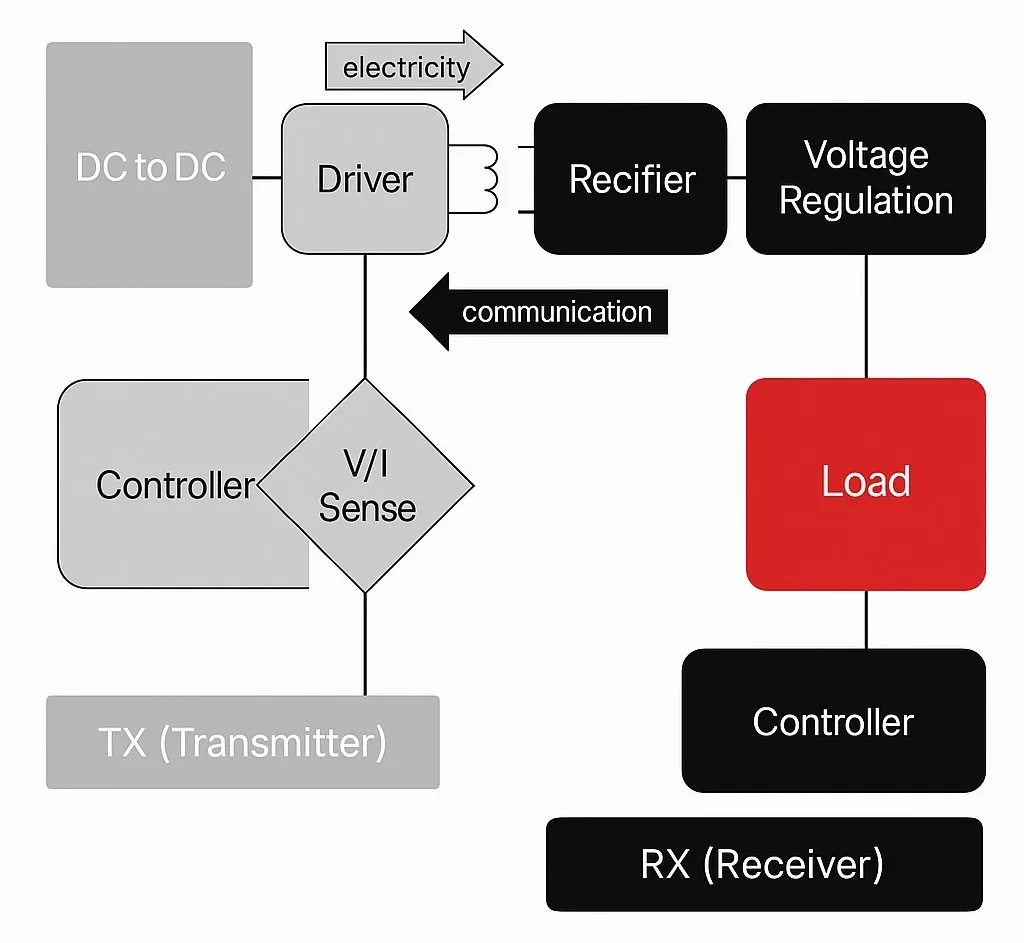
Aside from standard public 5G core network elements (control plane functions such as AMF, SMF, UDM, and user plane functions like UPF), 5G-R deployments may include railway-specific equipment such as mission-critical broadband cluster communication (MCX) devices, 5G intelligent network (5G-IN), and 5G equipment identity registers (5G-EIR).
MCX devices enable interworking between 5G-R and other communication systems, delivering integrated dispatching services across wired and wireless networks. They also allow interconnection with fixed railway telephone networks for official communication needs.
Who defines the 5G-R standard?
5G-R is based on 5G (IMT-2020), and the 5G standards are developed by the 3rd Generation Partnership Project (3GPP). 5G has progressed through 3GPP Releases 15–17. Release 18 is approaching freeze and will mark the start of the 5G-Advanced era.
Another international organization focused on railway communication standards is the International Union of Railways (UIC), which participated in GSM-R standard development. In 2012, UIC, together with ETSI and 3GPP, initiated the FRMCS project (Future Railway Mobile Communication System). UIC included 5G in FRMCS research in 2016, aiming to release a first FRMCS edition based on 3GPP Release 17 around 2025 for railway pilot deployments.
In the Chinese market, China State Railway Group established the Next Generation Communication Research group (NGCR) in 2015, with subgroups focusing on spectrum, standards, services, industry, and testing. In August 2020, China State Railway Group published a planning guideline that explicitly called for strengthening construction and application of 5G networks and related infrastructure, and for advancing a next-generation railway mobile communication private network.
The railway group has since issued implementation opinions and three-year action plans for 5G technology application research and deployment. Industry forecasts suggest parallel development of 5G-R and GSM-R through 2025, with 5G-R replacing GSM-R by 2030. Research on 5G-R in the 900 MHz band has also begun.
Significance of approving trial frequencies
Allocating operating frequencies is a fundamental prerequisite for developing a wireless communication technology. With a defined spectrum, industry research has a clear target, which supports faster maturation of the supply chain and incentivizes technological innovation.
Approval of trial frequencies allows China State Railway Group to advance research projects and field trials to validate the feasibility of the 5G-R frequency plan and compatibility with adjacent-band systems. It also enables accelerated progress on core, transport, and access network equipment, as well as terminals and modules.
Conclusion
High-speed rail and 5G are both strategic infrastructure elements for the Chinese market. MIIT's approval of trial spectrum indicates a commitment to advancing railway digitalization. Granting dedicated spectrum is beneficial to private network development and supports enterprise digital transformation. Whether additional spectrum will be allocated to private networks to further promote digital transformation remains to be seen.