ALLPCB


Overview
Network slicing is a telecom concept that divides physical network infrastructure into multiple virtual networks, called slices. Each slice operates as an independent network with dedicated resources and tailored characteristics to meet the specific requirements of different applications, industries, or users.
What is a network slice?
Network slicing can be understood as creating virtual private networks on a shared physical infrastructure. Each slice can be customized to meet specific performance requirements so that the applications or services it serves achieve the intended user experience. Network operators can allocate dedicated resources to slices to ensure required bandwidth, latency, and reliability.
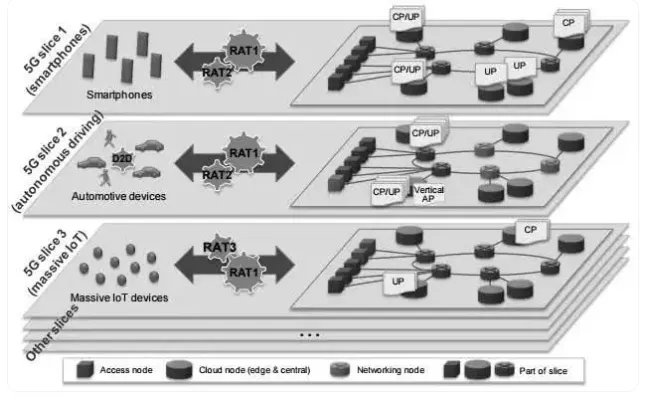
With 5G network slicing, multiple virtual networks can be created on a single physical infrastructure to provide customized connectivity for a range of services and applications. Each slice runs independently with isolated resources, management, and security policies, enabling different use cases without impacting overall network performance or reliability.
How it is implemented in 5G
Network slicing in 5G is enabled through software-defined networking (SDN) and network function virtualization (NFV). SDN enables dynamic allocation and management of network resources, while NFV allows network functions to be deployed as software instances decoupled from underlying hardware.
Why it is needed
The traditional mobile network business model is facing constraints, with growth not translating into increased revenue. To support new business models in vertical industries and provide finer segmentation of public networks, 5G network slicing offers stronger isolation, differentiated capabilities, and more efficient operational options.
5G end-to-end slicing
Network slicing in 5G is an end-to-end concept that includes radio access network (RAN) slices, core network slices, and IP transport network slices. The RAN and core network slicing architectures and technical specifications are defined by 3GPP, while IP transport slicing architecture and specifications are mainly developed by standards bodies such as IETF, BBF, IEEE, and ITU-T.
Key technologies
- Network architecture: A cloud-based virtualized architecture is required to implement network slicing. This architecture flexibly allocates resources to slices while maintaining isolation between them to meet diverse service requirements.
- Resource scheduling: Slices need dynamic scheduling of resources such as bandwidth, storage, and compute according to application demands. Efficient resource scheduling algorithms are required to ensure reasonable allocation and utilization.
- Flexible service delivery: Service providers must offer flexible, slice-based services to meet different user needs, enabling customized service models for varied application scenarios.
- Security: Because slices may carry data and services with different sensitivity levels, robust security measures are needed to ensure data confidentiality and integrity.
- Unified interface standards: Different slices should follow unified interface specifications and standards to ensure compatibility and interoperability, simplifying management and maintenance.
- Virtualization: Physical network resources are virtualized into multiple slices, each tailored to specific service requirements to deliver customized network services.
- Isolation and independent management: Each slice is isolated and independently managed and optimized, preventing mutual interference and ensuring reliable network performance and service delivery.