ALLPCB


Overview
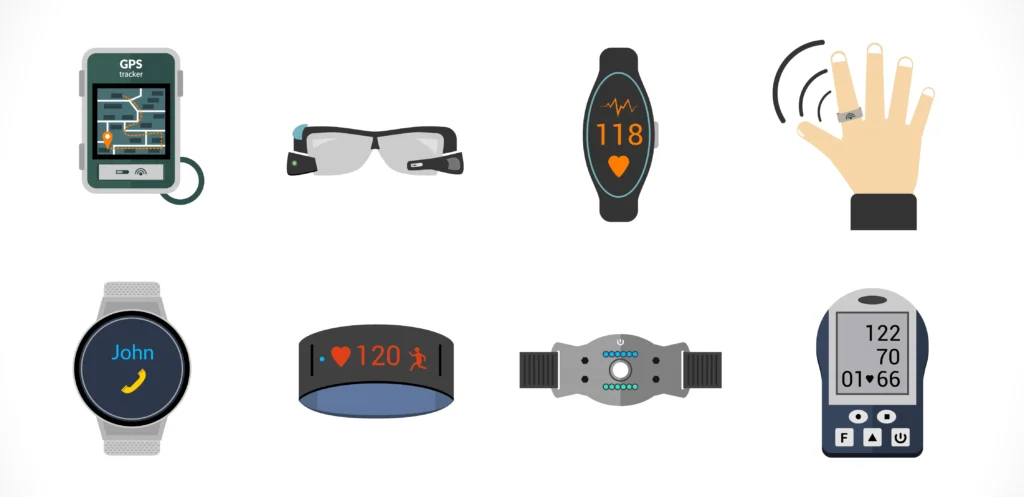
When people think of wearable devices, most imagine wrist-worn smartwatches, fitness trackers, and heart-rate monitors. The wearable market has, however, expanded beyond these standard devices and is emerging across several new application areas. Smart clothing that provides healthcare functions is one such emerging area: electronics are woven into shirts, blankets, bandages, beanies, or pants to perform specific care functions.
Smart clothing, also called electronic textiles, is still at an early stage of development and has limited practical use in hospitals and other care settings. Nevertheless, the technology has significant potential. Many healthcare organizations and medical device manufacturers are pursuing pilot projects and exploring new e-textile techniques. There is an expectation that smart clothing could transform parts of the healthcare sector within a five-year horizon.
E-textiles and how they work
Smart clothing is viewed as a healthcare innovation intended to monitor health or assist treatment, reducing reliance on expensive medical equipment and systems. Smart garments can track chronic conditions and improve patient comfort during inpatient care, which may be particularly valuable for aging populations. As such, they are considered a potential way to create value, improve health insights, and reduce costs.
Electronic textiles combine traditional fiber fabrics with conductive fibers and integrate biomedical sensors, microcontrollers, optical fiber, and wearable antennas along with other electronic components. Examples of components used in e-textiles include heart-rate monitoring modules based on AD8232/33, which can extract, amplify, and filter small biosignals in noisy conditions, and prototyping platforms such as the Intel Edison that provide system modules and wearable antenna options for IoT and wearable product development.
Typical e-textiles are produced using industrial sewing machines controlled by computer programs to stitch conductive thread into patterns. Metal fibers such as silver, nickel, carbon, copper, aluminum, and stainless steel have a hand similar to traditional thread and can be used in textile construction. Platforms and modules designed for wearables are often sewable and compatible with common development ecosystems.
Depending on how conductive fibers are woven and how electronics are attached, some electronic textiles can be washed like ordinary garments. Durability of the fabrics remains a challenge, though ongoing research and commercial efforts aim to address this issue.
Market drivers and challenges
Commercialized examples of smart clothing remain limited. One reason is that many companies in the medical sector are cautious about investing in such projects, preferring to wait. Manufacturers often target the health and sports markets first because failures there carry lower costs. At the same time, chronic conditions such as diabetes, heart disease, cancer, and respiratory diseases are rising in many regions. In places with longer lifespans and increasing surgical procedures, development of smart clothing can drive new electronic products and medical advances. Clinical trials have shown potential for infection control, continuous health monitoring, and assisting prevention, treatment, and disease management.
There are notable opportunities in caregiver and home-monitoring contexts, where long-term monitoring needs drive demand for wearable solutions. However, e-textiles face unresolved issues around reliability, liability, and regulatory approval. Approval processes such as those by the FDA can take years, and obtaining insurance reimbursement and certification poses additional barriers. For companies currently working in the smart-clothing field, achieving measurable clinical and commercial results can require three to five years, with some experts suggesting an industry inflection point around 2020.
Addressing current issues
Market analysts note that wider adoption by vendors is more likely if the technology demonstrates clear financial or economic benefits. Integrating electronic textiles such as sheets or mattress covers with pressure sensors to detect patient movement can help prevent pressure ulcers. Adding humidity sensors to garments can assist in monitoring incontinence and reduce the time and cost currently spent by hospitals and care centers on these issues.
Some manufacturers are working with partners to produce FDA-compliant medical-grade sensors at scale. Examples include bioimpedance vests that detect pulmonary fluid accumulation for heart-failure monitoring, chest bands that analyze lung function by measuring thoracic shape, and phototherapy blankets for neonatal jaundice that allow treatment while infants are held by caregivers rather than placed into stationary devices.
There are also projects developing washable compression socks that measure limb volume changes to detect edema. These products are progressing toward clinical trials and validation and are intended to monitor conditions such as congestive heart failure, preeclampsia, hypertension, edema, and proteinuria. Such socks can pair with smartphone apps to provide activity-based guidance and enable remote adjustments or clinician review.
Suppliers such as Hexoskin produce garments that integrate sensors for physiological monitoring across fitness and medical domains. Long-term remote monitoring trials embed sensors in shirts for ECG, pulmonary function, and activity monitoring.
Academic research directions
University research is contributing to progress in medical e-textiles. Finland's VTT Technical Research Centre has developed smart fabrics for garments or blankets that assess environmental comfort by comparing body and ambient temperature; garments could dynamically regulate temperature during operations to improve patient comfort in surgical settings.
Research groups at Ohio State University are integrating antennas and electronics into wearable caps and other garments to collect, store, and transmit data using fabric antennas and embedded platforms. Projects include using data analysis to assist detection or management of epilepsy and developing smart bandages to indicate subdermal tissue healing.
Researchers at the University of Bristol are developing soft robotic garments to help people at risk of falling by providing assistive forces during standing and walking. This research spans nanoscience, 3D fabrication, electrical stimulation, and full-body monitoring and could enable assistive solutions for wheelchair users in the long term.
Swiss research centers are integrating optical fiber into textiles to monitor skin perfusion and prevent pressure ulcers. They have also developed wearable caps that measure heart rate. Researchers expect these techniques to evolve into measurements of oxygen saturation, tissue pressure, and respiratory rate. E-textiles can also be adapted into chemical or biological sensors for analyzing body fluids or vapors. Low-power microcontrollers based on ARM Cortex-M architectures are commonly cited as suitable platforms for wearable medical applications, and integrated optical sensors such as MAX30102 are frequently used for pulse oximetry and heart-rate monitoring.
Outlook
Advances in high-tech fabrics and microelectronics are expanding opportunities for health-related electronic textiles. Several pilot ideas are underway, including T-shirts for chronic back pain, shirts for monitoring respiratory rates in chronic lung disease, belts for monitoring uterine contractions and fetal heart rate, pressure-monitoring socks for diabetes care, and shirts with defibrillation capability for severe cardiac conditions.
Some experts predict that smart clothing could eventually replace bedside monitors for tracking heart rate, blood pressure, and oxygen saturation in hospital settings. Gesture recognition integrated into garments has attracted interest for applications such as cyclist jackets and accessibility aids for people with paralysis, stroke, or mobility impairments. Haptic feedback and touch-sensing interfaces show promise in e-textiles because they can be miniaturized without moving mechanical parts. Haptic-capable garments could be used for electrical muscle stimulation and rehabilitation, enabling stimulation of muscle contraction at various force levels anywhere on the body. Numerous projects involving haptic feedback are in development.