ALLPCB


Introduction
The COVID-19 pandemic highlighted the importance of timely medical data for identifying susceptible and high-risk populations. Before the pandemic, medical wearables and other connected health devices could already provide the long-term data needed to alert clinicians to emerging health issues. After the pandemic, wearables are likely to play a larger role in healthcare. By providing continuously updated measurements of primary vital signs, wearables can help reduce time to treatment, reduce the burden of routine measurements on clinical staff, and allow clinicians to focus on patient care. This article examines how wearables can deliver long-term, effective solutions to supply clinicians with essential patient baseline data.
Importance of Vital Sign Monitoring
Vital sign monitoring enables healthcare providers to detect changes in a patient’s condition or chronic health problems at an early stage. For decades, measurements of primary vital signs—temperature, pulse, respiratory rate, and blood pressure—have been taken before visits to doctors' offices, clinics, or hospitals. In some clinical contexts, additional physiological indicators such as peripheral blood oxygen saturation (SpO2) have become increasingly important and are now part of routine vital sign assessment.
Clinicians with appropriate training and clinical experience can infer potential pathologies from changes or abnormal readings in primary vital signs, including:
Temperature, which reflects the immune system’s response to infection or other conditions.
Heart rate, which can indicate possible cardiac issues.
Respiratory rate, which reflects overall cardiopulmonary status and is particularly important for detecting potential heart or lung problems.
Blood pressure, which reflects cardiovascular health and can indicate a range of other conditions.
During the COVID-19 pandemic, vital sign monitoring became especially important. Clinicians observed that SARS-CoV-2 infection induces an immune response that often leads to fever, making elevated temperature a relatively reliable predictor and a widely used screening tool for suspected cases. For individuals considered high risk due to age, chronic health conditions, or compromised immune systems, routine monitoring of a full set of vital signs remains important.
For patients infected with SARS-CoV-2, clinicians monitor a range of vital signs to track disease progression. SpO2 measurement is critical for detecting drops in blood oxygen saturation, which are closely linked to the virus’s respiratory effects. As oxygen saturation declines, respiratory rate often increases as the cardiopulmonary system attempts to compensate. Because disease progression can seriously affect health, frequent monitoring of vital signs is essential.
Monitoring Vital Signs with Wearable Technology
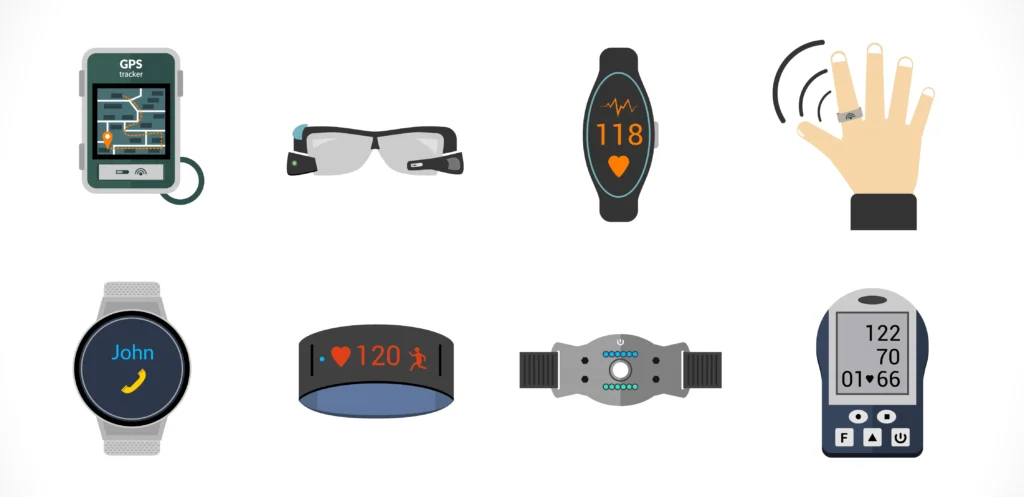
For each primary vital sign, wearable technologies already exist or are emerging to enable long-term periodic monitoring. Temperature wearables have been widely adopted in some hospital settings, particularly neonatal wards, where infants wear miniature wireless temperature sensor patches that allow clinical staff to monitor temperature without disturbing the patient.
Smartwatches and fitness bands with built-in heart rate monitors (HRM) provide basic heart rate measurements and also serve as a foundation for detecting other health issues. The digital health company Cardiogram and the University of California, San Francisco (UCSF) used HRM data from smartwatches and found that routine heart rate data can detect atrial fibrillation and other arrhythmias. Further research indicated that heart rate data may offer early indicators of diabetes or prediabetes. Additional heart rate analyses can provide heart rate variability (HRV) metrics to reveal physiological pathologies, such as cardiovascular disease, and psychological conditions, such as anxiety or depression.
Other analytic techniques that use the same types of optical sensors found in HRM smartwatches can derive SpO2, respiratory rate, and blood pressure without separate pulse oximeter clips, chest straps, or cuff-based devices. Similarly, some wearables and measurement technologies can generate electrocardiograms (ECG) with sufficient resolution to alert clinicians when more detailed examination is warranted.
Over the long term, wearables can also support patient adherence to treatment while reducing the need for clinic visits or in-home use of large diagnostic equipment. While some wearable medical measurements exhibit variability or reduced resolution compared with clinical instruments, their data often provide useful early warning signals for healthcare providers.
Supporting Technologies for Enhanced Healthcare Monitoring
Advanced sensor technologies and complex analytics are only part of the wearable healthcare landscape. Continuous vital sign monitoring also depends on supporting technologies. Wearable developers can leverage a range of wireless connectivity solutions, including microcontrollers with integrated wireless electronics that provide Bluetooth 5 and other connectivity options.
Wearable devices can implement standard security mechanisms to provide high levels of data confidentiality and integrity across the medical data chain. Wearables based on wireless microcontrollers can securely transmit medical data to mobile devices, local networks, or cloud services. Bluetooth-enabled devices also form a basis for contact-tracing algorithms while minimizing risks to individual privacy and security during outbreaks. The functionality and low-power performance of Bluetooth and other ultra-low-power devices support increasingly complex medical algorithms without exceeding the limited power budgets of battery-powered products.
Conclusion
Wearables are small and comfortable to wear, and they can perform unobtrusive measurements at the update frequency and duration clinicians require without adding to clinical staff workload. Existing underlying wearable technologies and analytics can be used to support recovery from pandemics and to improve health and well-being.