ALLPCB


Temperature is one of nature's most sensitive universal signals. From the tender shoots pushing through soil to the blazing heat inside a steel furnace, temperature silently influences the rhythm of many processes. It is a critical production parameter in agriculture, animal husbandry, and industrial manufacturing, and it is also a vital environmental parameter for all life on Earth.
Accurate temperature measurement has therefore become an important lever for improving quality and efficiency across industries. Digital temperature sensors, used alongside Internet of Things (IoT) technology, are a key method for converting temperature into fast, usable digital information. A digital temperature sensor outputs digital signals directly. It typically offers miniaturization, easy integration, low power consumption, and high accuracy, and is widely used in wearables, medical monitoring, industrial automation, smart home systems, and building automation.
Digital Temperature Sensor as the Temperature Processing Core
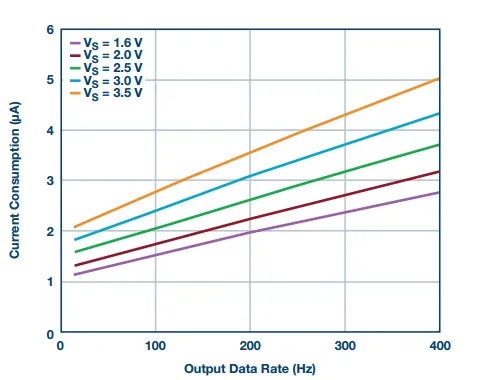
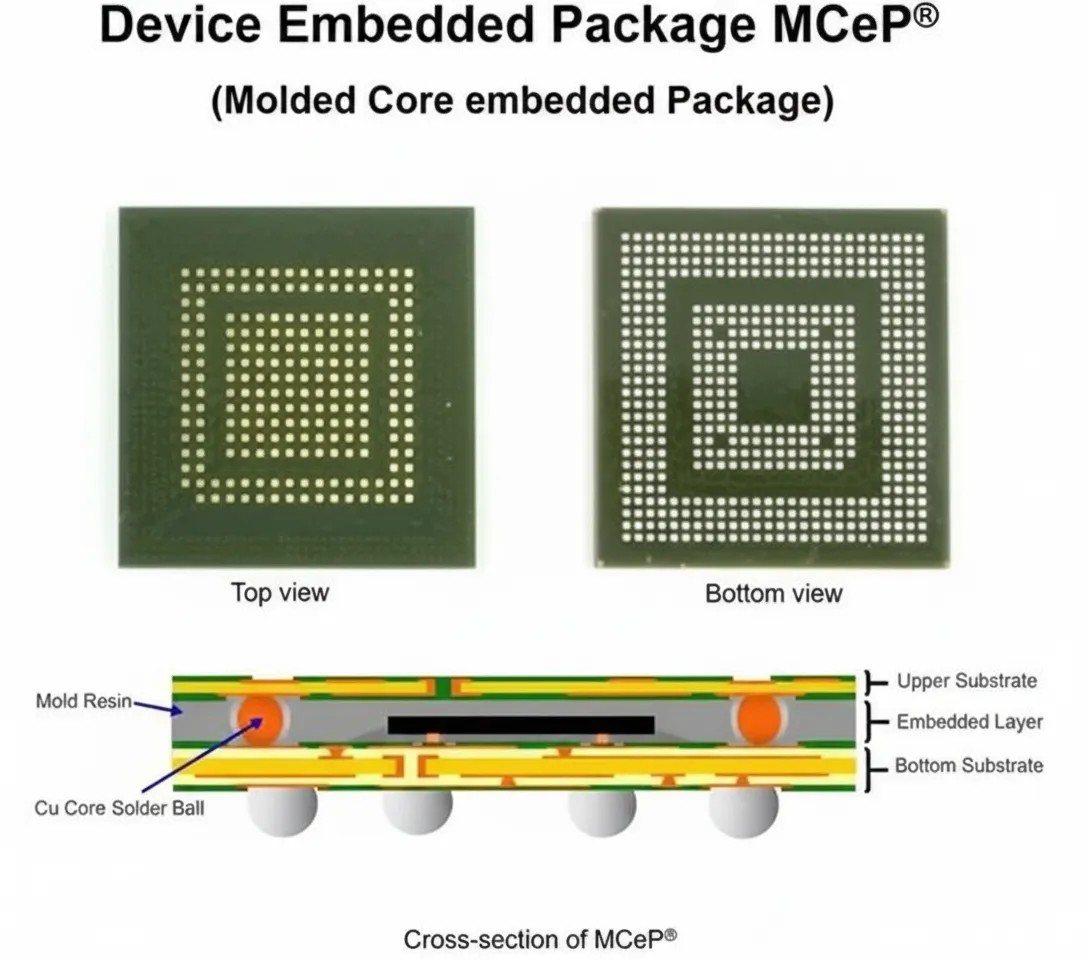
Huapu Micro's T09 is a digital temperature sensor. Its measurement accuracy is ±0.2°C in the -10°C to 65°C range. The device operates from 1.71 V to 3.6 V, and its operating temperature range is 0°C to 125°C. The T09 uses WLCSP packaging with dimensions of 1.5 × 1.0 mm. Typical active current is 6 μA and standby current is 0.1 μA, making it suitable for battery-powered or mobile IoT devices.
The T09 is designed for easy integration. It ships factory-calibrated, includes integrated linearization, and supports eight independent I2C addresses so that up to eight T09 devices can share the same bus. The device also provides alarm functions and can trigger interrupts to protect systems from overtemperature conditions.
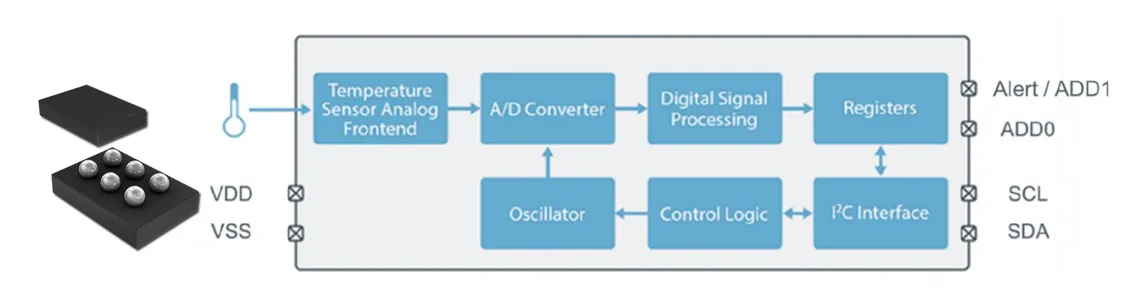
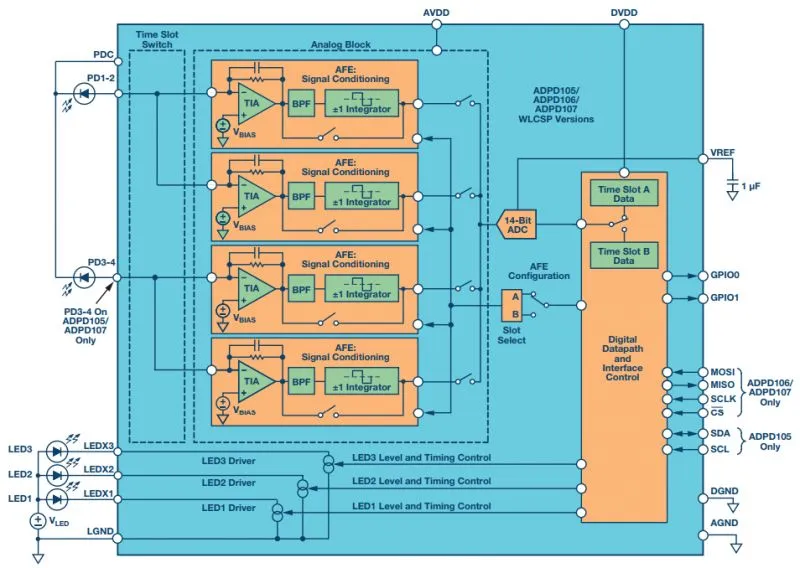
As shown above, the T09 consists of a temperature sensing element, an A/D converter, a digital signal processor, a register set, and an I2C bus interface, forming a complete digital temperature sensing system. The analog signal from the temperature sensor is converted to digital by the A/D converter. The digital signal processor further processes the data and writes results into registers.
The register set includes TVAL (temperature register, read-only), CONFIG (configuration register, read/write), TLOW (low-temperature alarm register, read/write), THIGH (high-temperature alarm register, read/write), and INDEX. The host processor accesses these registers over the I2C bus to configure the T09 and to read temperature data.
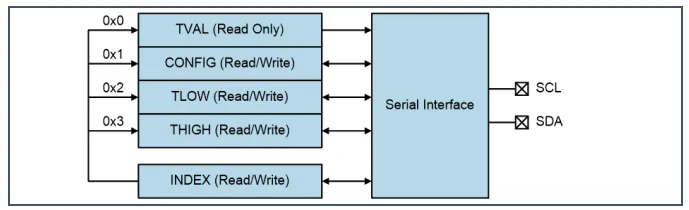
For example, CONFIG is a 16-bit register. When the host writes data to address 0x1 over I2C, it modifies the 16-bit CONFIG value. Reading from that address returns the current configuration state.
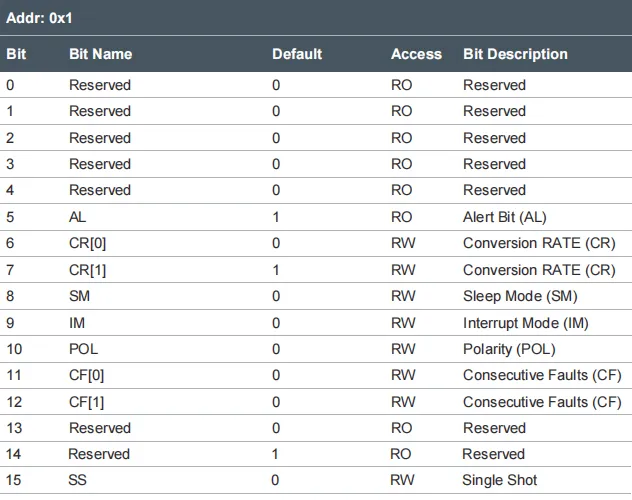
Example: To set the T09 to sleep mode, the host writes the 16-bit value 0000 0101 1000 0010 to the configuration register at address 0x1 (bit 8, SM, is set from 0 to 1). The T09 will immediately operate under the new configuration and enter sleep mode. The register configuration provides flexibility for adapting the T09 to different application scenarios. Note: see the T09 product datasheet for more details.
Digital Temperature Sensors as Device Temperature Sensing Nodes
The T09 connects directly to digital circuits over an I2C interface. This connection simplifies temperature monitoring circuit design, reduces system cost, and can improve overall system stability and reliability.
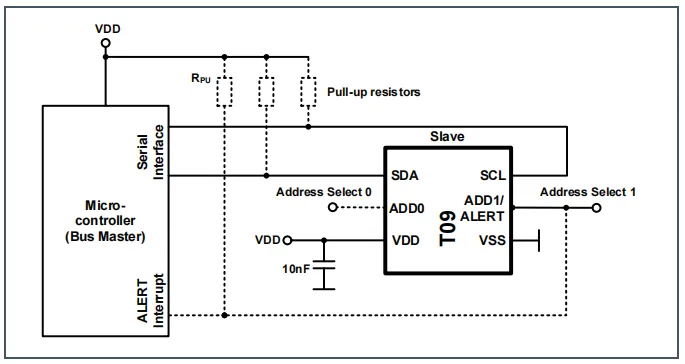
In smart home systems, embedding a digital temperature sensor in devices such as air conditioners or underfloor heating lets the system monitor room temperature in real time and adjust device operation according to temperature thresholds stored in registers. This allows automated control for energy management and occupant comfort.
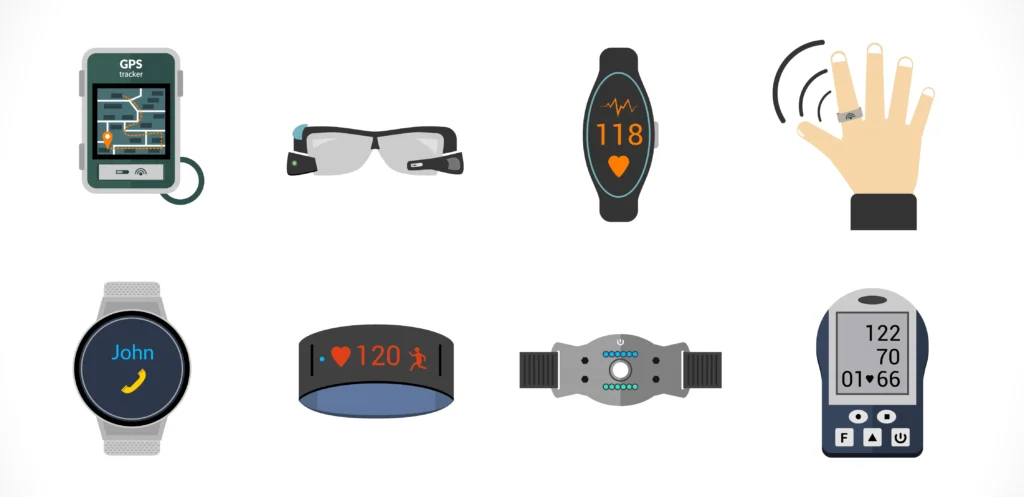
In wearable devices, embedding a digital temperature sensor in smartwatches or fitness bands enables accurate tracking of body temperature changes. By configuring low and high temperature alarm thresholds in registers, the device can alert the user—via vibration or other methods—when body temperature remains above or below set thresholds.
Looking ahead, as IoT, big data, and artificial intelligence technologies converge more deeply, digital temperature sensors will evolve from simple sensing elements into integral components of intelligent systems. They will play important roles in predictive maintenance, energy management, and health monitoring.