ALLPCB


This article examines a current topic in telecommunications: non-terrestrial networks (NTN). Demand from the 5G NTN market for NXP Layerscape processors has increased recently, indicating growing market interest.
What is NTN?
Non-terrestrial networks extend existing terrestrial wireless networks using satellite-based systems. Rather than involving extraterrestrial communication, NTN augments operator networks such as Verizon, Vodafone, and China Mobile to expand wireless coverage and aim for truly global reach.
This idea is not new. Those familiar with Motorola may recall the Iridium satellite constellation, which in the early 2000s provided mobile phone access via satellites. Users benefited from global coverage, but the service was ahead of its time and became a niche, high-cost market due to limitations of then-available technology.
Market Shifts
Why might NTN succeed now where earlier efforts did not? Several interacting factors are changing the landscape.
- Lower launch costs: Reusable launch vehicles have significantly reduced satellite deployment costs. SpaceX's reusable technology has been particularly notable, lowering barriers to entry and opening space access to non-government entities.
- Standardization and reuse: The flexibility of 5G waveforms includes support for non-terrestrial deployments. This enables reuse of large parts of terrestrial technology in NTN scenarios, including 5G ecosystem components, interfaces, and protocol stacks, which reduces complexity, time, cost, and risk.
- Growing demand: Approximately half the global population remains without reliable communication services. That represents both market potential and a route to possible government support for deployment.
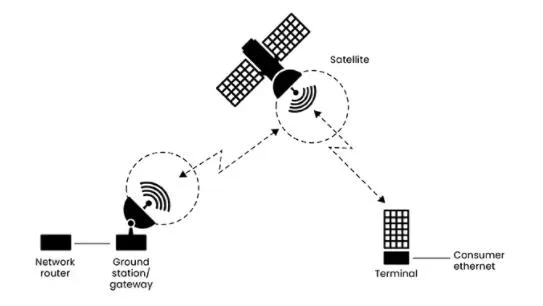
Typical NTN system with ground station, satellite, and terminal units.
NTN Target Applications
NTN systems vary in function, architecture, and deployment because they must address a wide range of application requirements:
- Broadband wireless access: Consumer-oriented "internet-to-home" services are familiar examples. Wireless internet is vital in rural areas where fixed networks are impractical. According to UN data, around half the global population lacks internet access.
- Internet of Things (IoT): The IoT market consists of many connected devices that require wireless connectivity without wired infrastructure. IoT devices range from tiny agricultural sensors that transmit a few bits per day to vehicles that generate gigabits per second.
- Positioning, navigation, and timing (PNT): GNSS-based PNT services are a multi-hundred-billion-dollar market and are expected to grow with autonomous vehicles, drones, and other mobility solutions that require precise position information. Existing GNSS systems have limitations such as weak indoor coverage, insufficient accuracy for some applications, and susceptibility to spoofing.
Constellation Types
Satellite networks are characterized by constellation type, which defines satellite-to-Earth distance and overall network configuration. Choosing a constellation involves trade-offs among required satellite count, per-satellite cost, latency, and throughput.
Constellation types are categorized by orbit altitude: geostationary orbit (GEO), medium Earth orbit (MEO), low Earth orbit (LEO), and less common options such as high-altitude platform systems (HAPS) and highly elliptical orbit (HEO).
GEO — Geostationary Orbit
GEO satellites orbit at approximately 36,000 km and remain fixed relative to a point on Earth's surface, making them suitable for location-stable services such as traditional TV broadcast. GEO satellites cover broad areas but incur high latency (round trip around 550 ms), which challenges real-time applications.
MEO — Medium Earth Orbit
MEO satellites operate between roughly 5,000 km and 20,000 km. They are part of the non-geostationary satellite group (NGSO). The Global Positioning System (GPS) is a well-known MEO system, operating around 20,200 km in semisynchronous orbit with a 12-hour period.
LEO — Low Earth Orbit
LEO satellites orbit at roughly 500–1,200 km. Deploying at this altitude is far less costly than GEO or MEO, so thousands of satellites perform scientific, communications, and imaging tasks in LEO. Each satellite covers a relatively small geographic area, requiring many satellites for global coverage and resulting in short orbital periods (<2 hours). Atmospheric drag shortens LEO satellite lifetimes to about 7–10 years.
LEO's combination of limited lifetime, strong real-time performance, and need for many satellites has made it particularly attractive for recent commercial innovation and batch satellite deployment by low-cost space companies.
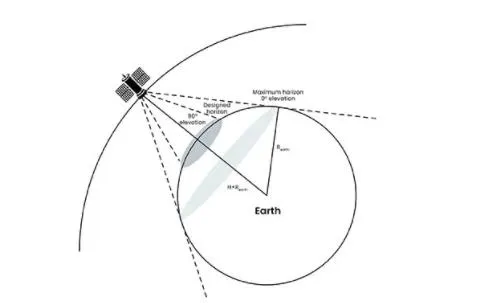
A key NTN system challenge is how much area a satellite can cover.
Standardization
NTN features have been progressively standardized within 3GPP. Research work began in Releases 15 and 16, and by Release 17 normative work started to adapt the 3GPP protocol stack to better support broadband and IoT applications over space links.
Several aspects of the 3GPP stack are being optimized for space deployment, including physical layer considerations such as Doppler shift and propagation delay, and long round-trip times that affect retransmission algorithms and control-plane signaling. Control-plane signaling enhancements are required to incorporate satellite information and to support handover for non-mobile user equipment.
Components and Stress Factors
Semiconductor component suppliers face particular challenges because the space environment imposes stressors different from Earth: extreme temperature cycles, vibration, and radiation. Systems in higher orbits, especially those outside the Van Allen belts, may require radiation-hardened parts to withstand intense radiation levels. Component designs must also meet expected lifetimes: GEO satellites commonly have design lives of 15 years or more, while LEO satellites have shorter effective lifetimes. Longer-lived equipment accumulates more radiation exposure over time.
Because of these stress factors and long operational lifetimes, the choice of parts suitable for satellite systems is much more limited than for consumer electronics. Some suppliers specialize in space-grade components and subsystems.
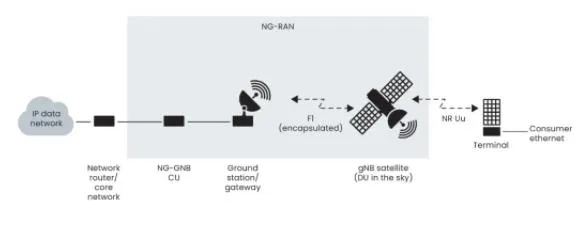
Complexity-Driven Design
NTN system design must address unique challenges such as handling Doppler effects, ensuring reliability, and considering mesh networking options. NTN capacity tends to be limited relative to terrestrial systems and components that meet space requirements are less available and often hardened. At the same time, systems must support high-capacity transmission up to hundreds of gigabits per second.
These constraints drive modular engineering approaches, where smaller subsystems are instantiated repeatedly so engineering resources can focus on optimizing each module. Modular designs have enabled an ecosystem of specialized suppliers, each optimizing specific aspects of NTN systems.
Commercial Considerations
NXP supplies components used both on satellites and in terrestrial consumer devices, which creates commercial opportunities for component vendors in the NTN market. Many semiconductor products offer programmability and flexibility that help customers address NTN-specific challenges.
Outlook
NTN development is being driven by lower launch costs, reuse of terrestrial 5G technologies, and strong demand for broader connectivity. Standardization efforts and component innovations are addressing technical challenges, while modular architectures are enabling ecosystem participation. The future evolution of NTN will depend on continued advances in launch economics, component availability, and the ability to scale constellations to meet diverse application needs.