ALLPCB


Reasons for high-frequency transmission
There are several reasons for transmitting electromagnetic waves at high frequencies:
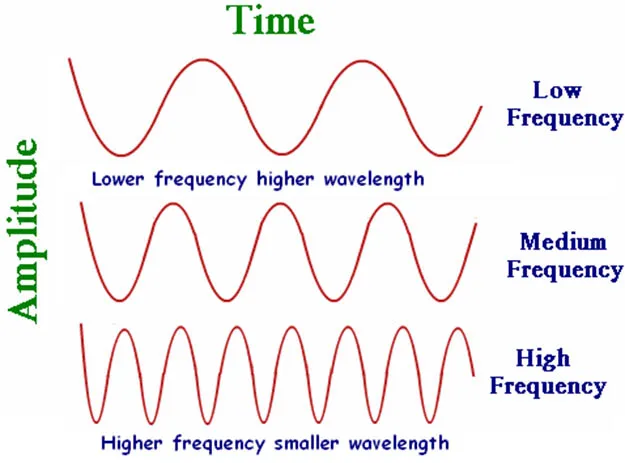
1. Information capacity: Higher-frequency electromagnetic waves have faster oscillations, which can provide greater bandwidth and higher data rates. This makes high-frequency signals suitable for high-speed, high-capacity data communications such as wireless and satellite links.
2. Resistance to interference: In general, higher-frequency signals are less susceptible to certain types of external electromagnetic noise and interference. Higher-frequency transmission can therefore improve the reliability and stability of communication.
3. Range and penetration: High-frequency electromagnetic waves experience greater attenuation and obstacles in propagation, resulting in relatively shorter transmission distances. However, high-frequency waves can also interact with obstacles differently and may be used effectively in complex environments such as urban areas.
4. Spectrum resource utilization: Wireless communication must operate within limited spectrum resources. Higher-frequency bands can enable higher spectral efficiency and support more simultaneous users, increasing the capacity of wireless systems.
In summary, choosing higher-frequency electromagnetic transmission can offer larger bandwidth and higher data rates, improved resistance to certain interference, and more efficient use of spectrum resources. Different applications and scenarios will have different frequency requirements and trade-offs.
Principles of electromagnetic wave interference
The main mechanisms by which electromagnetic waves interfere with each other include:
1. Signal superposition: When multiple electromagnetic waves propagate in the same space, they superpose. This superposition can increase or decrease signal amplitude, causing distortion and interference.
2. Multipath propagation: During transmission, electromagnetic waves often travel along multiple paths due to reflection, refraction, scattering, and so on. Waves arriving via different paths interact through interference, producing multipath effects. Multipath interference can cause fading, distortion, and periodic variations in received signal strength.
3. Frequency collision: If different signals operate in adjacent or overlapping frequency ranges, they can collide in the spectrum. Overlapping signals interfere with each other, degrading signal quality and potentially causing communication failures.
4. Phase differences: Phase difference refers to time or spatial offsets between the oscillation starting points of different waves. When waves with phase differences meet, they can interfere, causing signal distortion and degradation.
5. External interference sources: Electromagnetic waves can also be affected by external sources such as electrical equipment, radio transmitters, and arcs. These sources introduce additional noise and interference that impact the original signals.
The above outlines the primary principles behind electromagnetic wave interference.