ALLPCB


Introduction
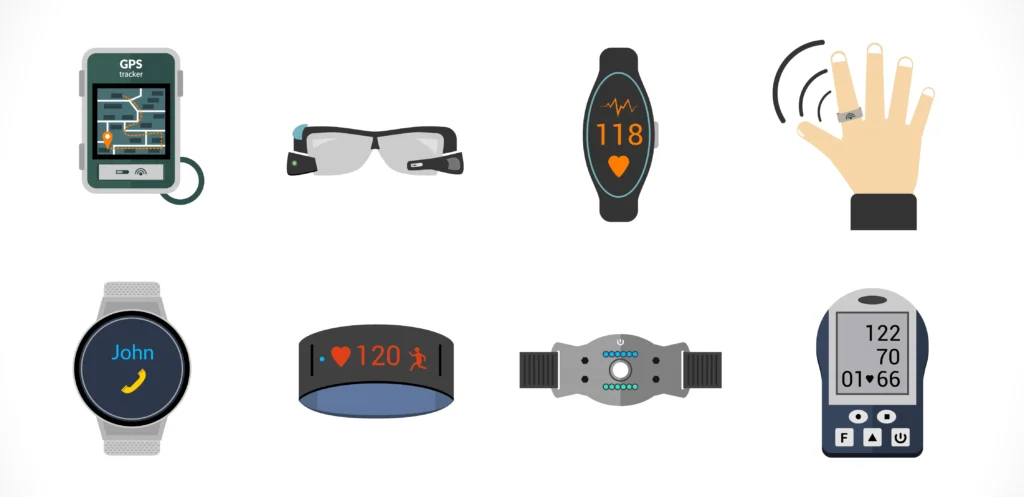
Wearable electronics are increasingly ubiquitous. Compared with early products, today’s wearables are no longer standalone devices. From smartwatches and smart glasses to medical patches, they are becoming integral to personal health and lifestyle.
By 2025 the global wearable market is expected to enter a phase of broad transformation for two main reasons: advanced technologies such as generative artificial intelligence, enhanced connectivity, and a new generation of short-range wireless communications are entering practical use; and consumer demand for health and fitness tracking has changed dramatically. Technology advances and evolving use cases are reshaping the industry.
Five Major Trends in Wearables
Wearables are becoming indispensable tools for health monitoring. In 2025 the focus will be on advanced health monitoring, artificial intelligence (AI)-driven personalization, and seamless integration with smart home and augmented reality systems.
Trend 1: Growing Role of AI in Wearables
Artificial intelligence is rapidly changing the landscape of wearable technology. Health tracking has long been a core capability, but AI-driven wearables will become more intelligent and intuitive. Devices such as smartwatches and rings equipped with next-generation biometric sensors will provide more than step and heart-rate counts. AI algorithms will enable new functions including continuous glucose monitoring, hydration monitoring, and stress detection, expanding the range of measurable vital signs.
For example, smart rings have proven effective for sleep tracking, providing deeper insights into sleep quality, blood oxygen saturation, and nocturnal heart rate variability. As health wearables become smarter, they will move from simple data collection to early detection of potential health issues. AI-driven personal health coaches may emerge to offer fitness plans, dietary adjustments, and injury-risk predictions based on exercise patterns.
Trend 2: Smartwatches Driving the Wrist-Worn Market
Smartwatches continue to drive market development through innovations in AI, health monitoring, and connectivity. Non-invasive glucose monitoring is one of the most anticipated breakthroughs in wearables, providing real-time glucose tracking without fingersticks. Several international smartphone manufacturers are investing in integrating this capability into next-generation smartwatches.
Trend 3: Advanced Sensor Technology Enabling Innovation
Demand for wearables with sleep and stress monitoring continues to grow. Advanced sensors for electrocardiography, blood oxygen, and sleep monitoring are driving improvements in health tracking. Sensor technology is making these functions increasingly accessible across price ranges, enabling broader functional innovation in wearables.
Trend 4: Smart Glasses and Smart Rings as New Growth Areas
Minimalist design and functionalization are trends in the next generation of consumer devices. Smart glasses and smart rings are gaining traction due to their compact form factors and innovative health-tracking features. Smart rings, in particular, are emerging as a compelling wearable category because they can be worn continuously and naturally, providing continuous and accurate health data. These small devices are challenging the smartwatch by offering many of the same functions such as health tracking, contactless payments, and smart home control.
At the same time, substantial performance improvements in augmented reality wearables are reshaping consumer expectations. 2025 is expected to be a year of significant progress for AR glasses and mixed-reality headsets.
Trend 5: Integration Beyond Health into Larger Ecosystems
By 2025 wearables will move beyond health tracking to become central elements of Internet of Things (IoT) ecosystems, interacting with other smart devices to create interconnected environments. Devices such as smartwatches and smart rings are being integrated with smart home systems, augmented reality platforms, and even vehicle systems. For example, a smart ring or smartwatch can function as a digital key to unlock doors or start a vehicle without a physical key.
Design Challenges and Technical Solutions
Wearable electronics now offer extensive functionality to monitor health, activity, and the environment. However, they face persistent challenges such as battery life, data privacy, and limited network bandwidth.
To address these challenges and enhance device capabilities, edge computing and AI/ML techniques are being deployed on wearables. Running AI/ML models locally enables devices to learn from data and perform recognition, classification, prediction, and optimization tasks without incurring latency, data-transfer costs, or excessive power consumption. AI/ML can also expand wearable functionality by processing collected biometric data to derive heart rate, blood pressure estimates, blood oxygen, and other metrics.
Processing: MCUs and Application Processors
Embedded microcontrollers (MCUs) and application processors provide greater processing power while maintaining ultra-low power consumption and small package sizes, making them well suited for wearable designs.
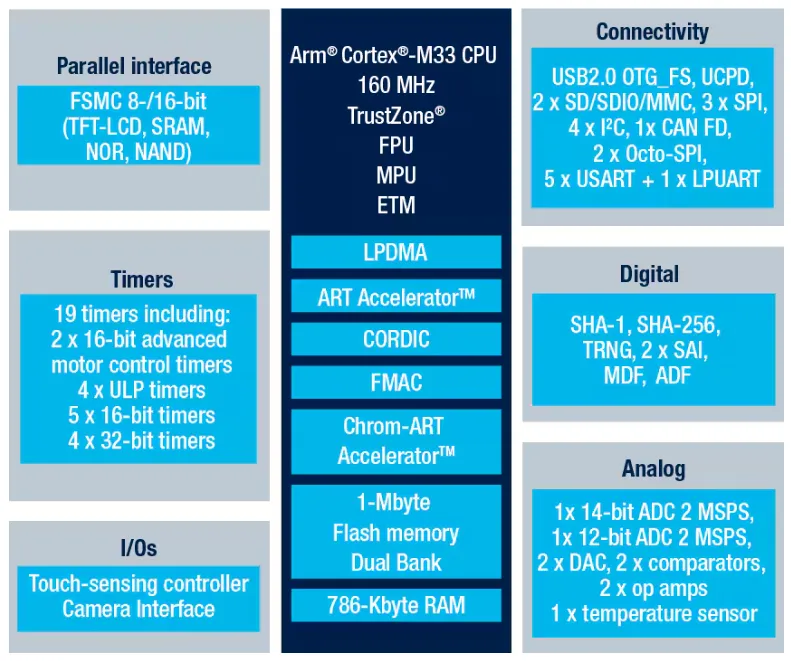
STMicroelectronics' STM32U575xx devices are ultra-low-power MCUs adopted in many wearable designs. These MCUs are based on the high-performance Arm Cortex-M33 32-bit RISC core, running up to 160 MHz. The core includes a single-precision floating-point unit and supports all Arm single-precision data-processing instructions and types. The core also provides a full DSP instruction set and a memory protection unit to enhance application security. Security features support secure boot, secure data storage, and secure firmware updates, and the device provides a trust-based security architecture foundation.
Power Management
Beyond the processing core, wearables require advanced power management to achieve long battery life and always-on operation. Designs typically use small rechargeable batteries and tight area constraints.
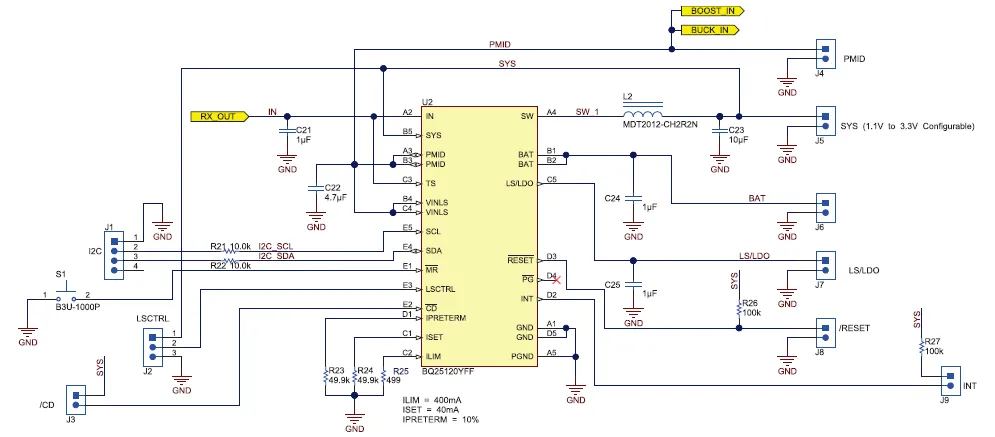
Texas Instruments' BQ25120 is a highly integrated battery-charger management solution that consolidates common wearable functions: a linear charger, buck output, load switch or LDO, manual reset with timer, and battery-voltage monitoring. Low quiescent currents during run and shutdown extend battery life. The integrated buck converter is an efficient, low-Iq switching regulator using DC synchronous control, which can reduce light-load current to around 10 μA.
Connectivity
Whether indoors or outdoors, users expect wearables to connect instantly to networks and other electronics. Among low-power wireless technologies, Bluetooth Low Energy (BLE) is the preferred choice for battery-sensitive wearables. BLE enables simple connections and communication with devices such as smartphones, tablets, fitness equipment, and other wearables. As more wearables add audio support, BLE’s advantages become more prominent. In smart homes, BLE’s enhanced performance and range support efficient communication between wearables and many IoT devices. Combining edge-AI-capable MCUs with BLE allows wearables to become more personalized, efficient, and secure in daily life.
STMicroelectronics' ultra-low-power dual-core multi-protocol wireless STM32WBx5 microcontroller family all support BLE 5.4; some products also support IEEE 802.15.4, Zigbee, Thread, and concurrent wireless standards. The STM32WB55 microcontroller is well suited for next-generation wearable sports devices. It is based on a high-performance Arm Cortex-M4 32-bit RISC core with single-precision FPU, supports DSP instructions, and includes a memory protection unit for enhanced application security. The device supports the latest BLE data communication technologies and enables accurate real-time data acquisition from various sensors.
Conclusion
Wearables have evolved from simple fitness trackers to smaller, more stylish, and smarter devices that integrate seamlessly into daily life. Emerging categories such as smart glasses and smart rings are gaining popularity, and the wearable market is growing rapidly.
Market forecasts project significant growth in wearable devices, including fitness bands, smart rings, smartwatches, and medical devices such as glucose monitors. Health remains the primary focus of wearable technology. The integration of fashion and technology will broaden appeal, and smart rings may become a preferred choice for health-focused users. AR wearables are becoming practical and entering everyday use. At the same time, AI-driven personalization and advanced biometric sensor technology are transforming health-focused wearables from passive trackers into proactive health tools.
Looking ahead, wearables will become more capable and stylish. AI and machine learning will enable better anticipation of user needs, and longer battery life along with more sustainable materials will further refine these devices as components of modern life.