ALLPCB


Introduction
Capacitors are fundamental circuit components and are among the most convenient, effective, and low-cost measures for EMC remediation. In ESD testing, common symptoms such as system resets or screen flicker can sometimes be resolved by adding a single capacitor. This article examines that application of capacitors.
Capacitor characteristics
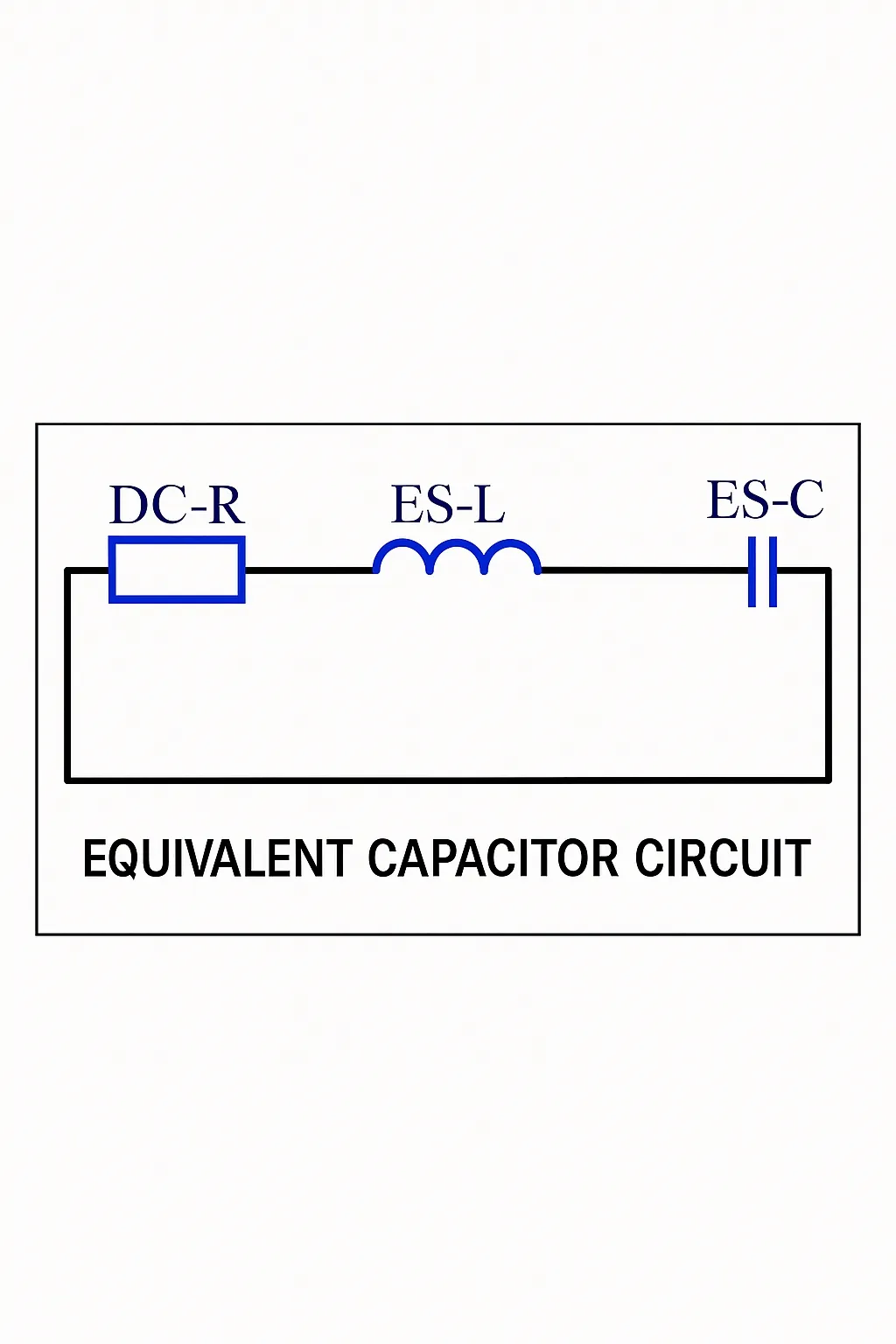
Practical capacitors are not ideal. They are represented by an equivalent circuit consisting of equivalent series inductance (ESL), equivalent series resistance (ESR), and capacitance, as shown in the figure below.
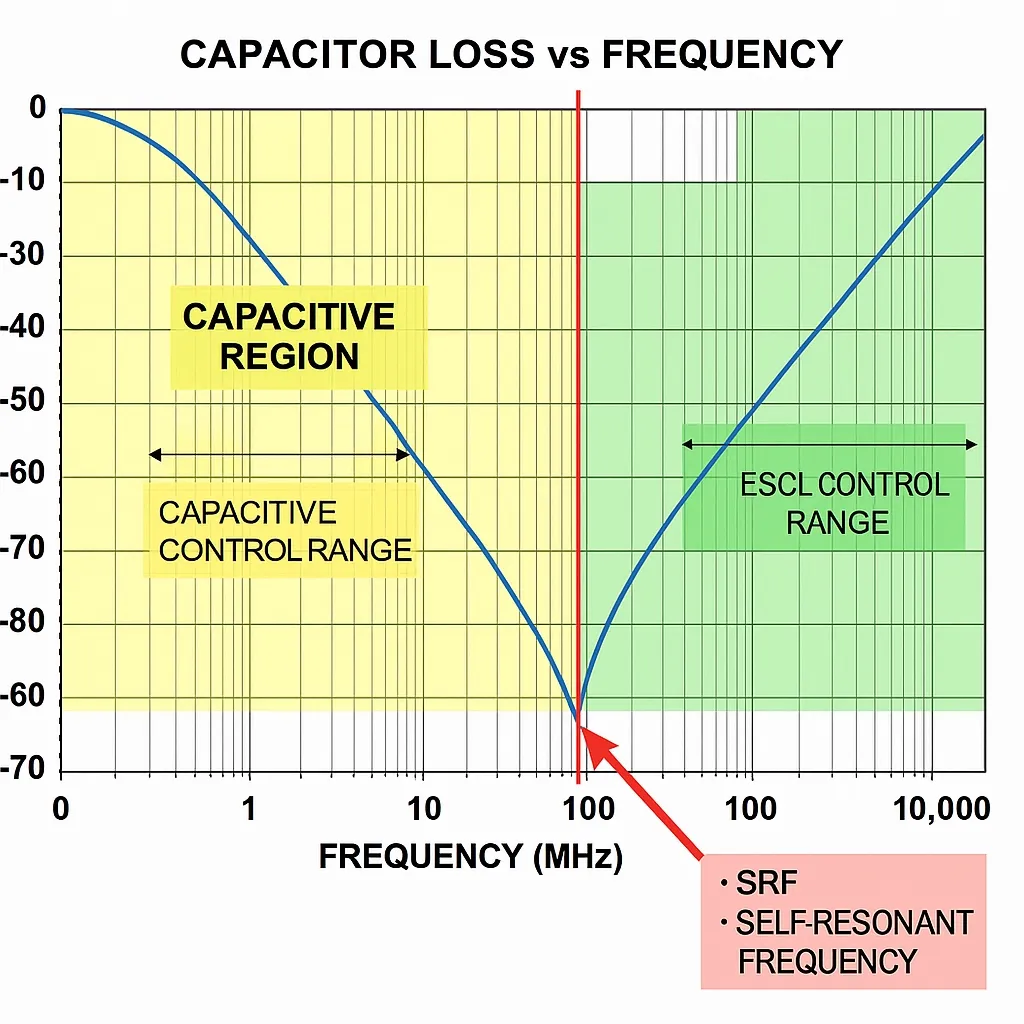
The frequency response of a capacitor shows that its effectiveness depends strongly on frequency, and the resonance frequency is the point where the capacitor's effect is strongest.
The usable frequency range of a capacitor can be estimated from its resonance frequency, given by the formula shown in the figure below.
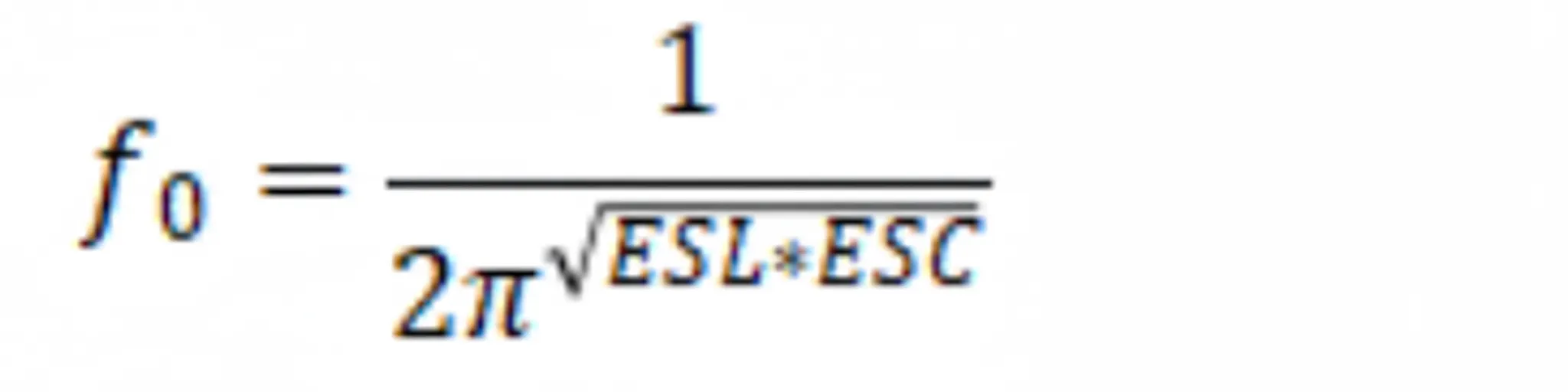
The resonance frequency f0 depends on the capacitance value and the parasitic inductance.
Capacitor applications in ESD mitigation
In practical ESD mitigation, capacitors are often added at ports or at chip pins for protection. Selecting the appropriate capacitance value requires understanding that different capacitances have different cutoff and resonance frequencies, and therefore different filtering effects across frequency bands.
Electrostatic discharge from a discharge gun can be treated as a common-mode disturbance. When selecting capacitors for ESD mitigation, choose components whose resonance frequencies lie within about 17.5 MHz to 350 MHz.
Case study
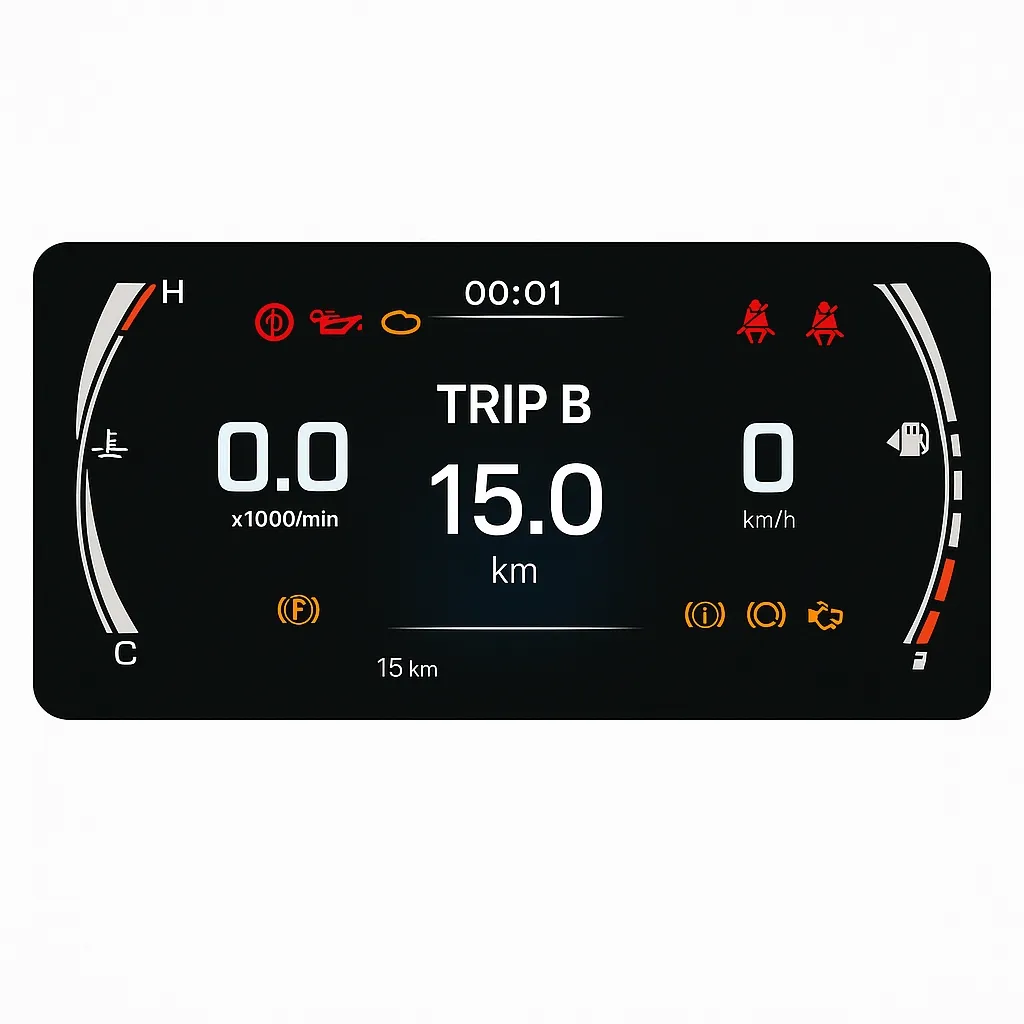
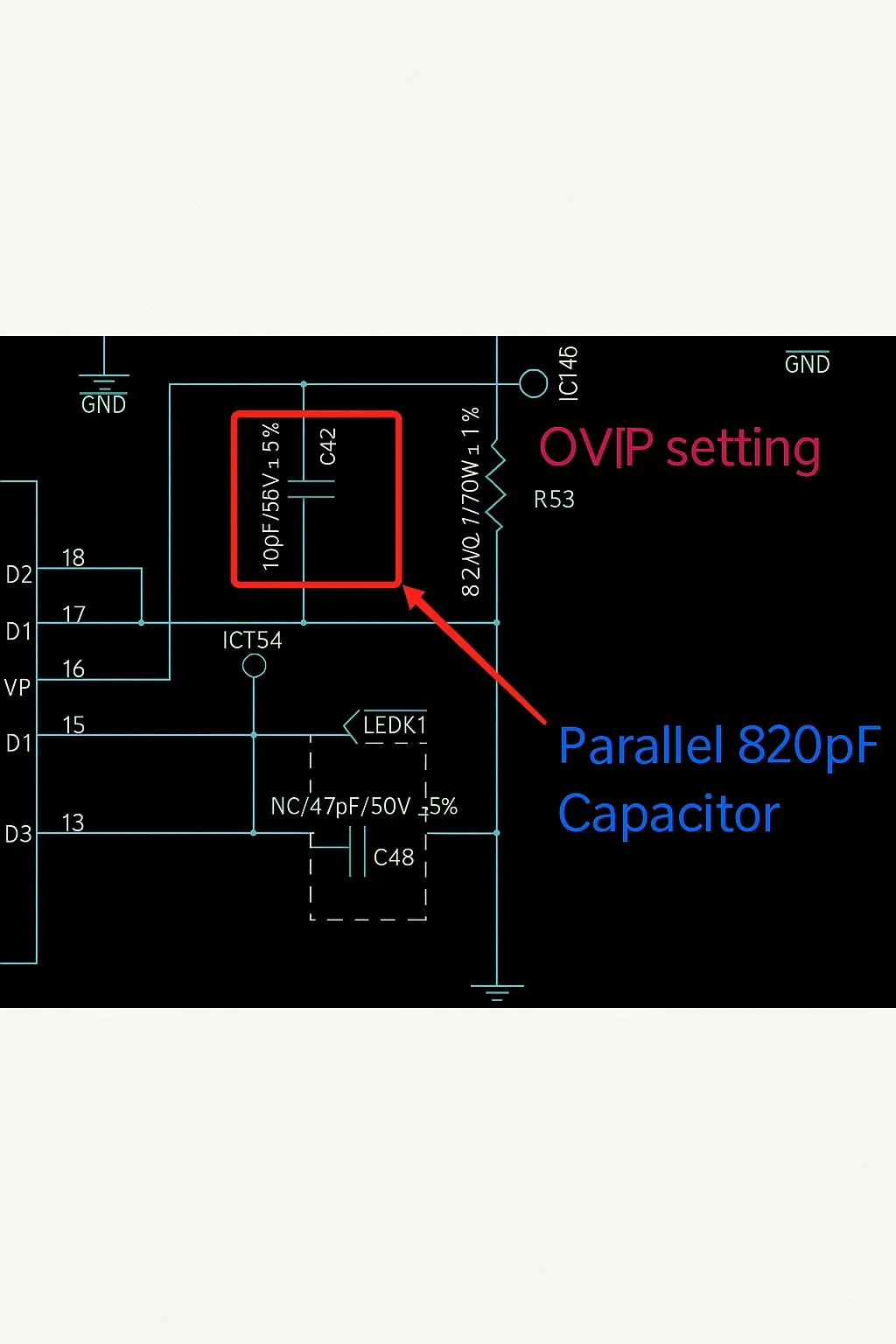
An automotive instrument cluster exhibited the following symptom: during air discharge above 10 kV, the center area of the screen backlight would extinguish. Contact discharge tests at 2 kV applied to the backlight power chip's enable and PWM pins did not reproduce the issue. The fault was reproducible at the chip's OVP (over-voltage protection) monitoring point. That pin already had a 100 pF capacitor, but it was ineffective because its resonance frequency was relatively high and offered less suppression at the lower frequencies involved. Adding a parallel 820 pF capacitor at that node eliminated the backlight extinguishing during air discharges of 10 kV, 15 kV, and 25 kV. The same modification produced consistent results on another unit, indicating that the added 820 pF capacitor provided effective suppression of the ESD disturbance.
Summary
Capacitors are widely used for filtering and protection in EMC remediation. Precisely selecting an appropriate capacitor is important and can save significant debugging and project time. This article summarizes practical experience intended to assist engineers in choosing capacitors for ESD mitigation.