ALLPCB


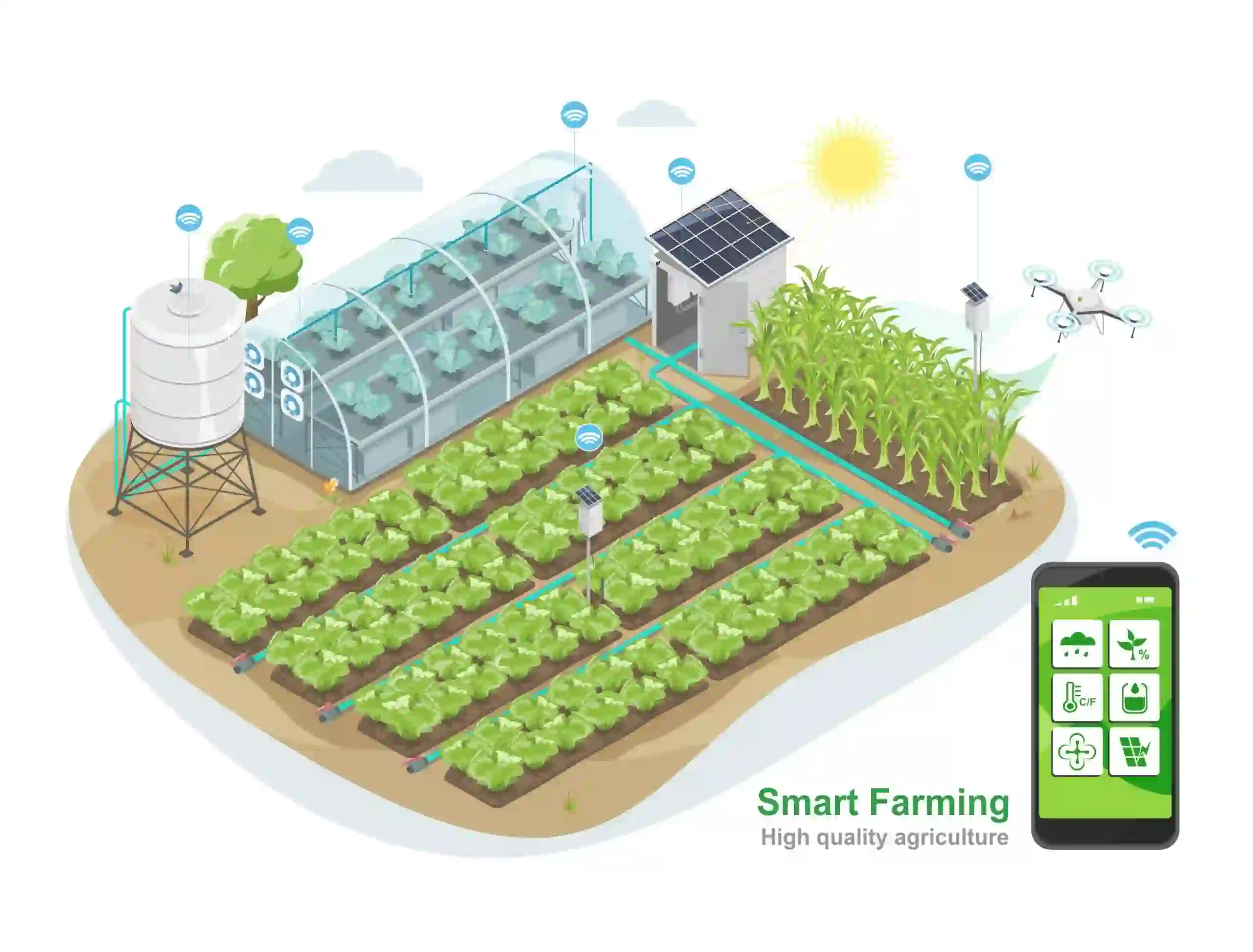
As growing conditions become less stable and predictable, Agriculture 4.0 is moving indoors and using connected technologies to increase agricultural productivity.
Vertical and Smart Agriculture
Vertical farming, also called smart agriculture, automatically tracks key parameters such as soil nutrients, temperature, and moisture to guide planting, fertilization, irrigation, and harvesting with the goal of increasing crop yields. This enables producers to control the amounts of seed, fertilizer, pesticide, and water applied. These variables are measured by systems of sensors, monitors, and computers. Driven by electrification and digitization, smart agriculture aims to help optimize operations and reduce waste. To meet food security and sustainability demands, many producers are focusing on smart greenhouses.
IoT in Greenhouses
Smart greenhouses use a range of IoT technologies, including environmental sensors that assess growth-condition data and enable targeted application of nutrients, pesticides, irrigation, and lighting. The objective is to optimize plant growth, reduce energy costs, and minimize environmental impact. These systems work together to improve yield and crop quality.
Durable Interconnects for Agricultural Environments
Advances in agricultural devices and systems require robust connectors to enable Agriculture 4.0 and to support both vertical and outdoor operations. Because these interconnects are used in harsh agricultural environments, they must resist dust, dirt, chemicals, and moisture ingress. Outdoor farm equipment also needs to withstand adverse weather conditions.
Role of IoT on Modern Farms
IoT plays a central role on modern farms. These connected technologies not only monitor and support plant growth, they can also monitor livestock health, location, and movement. They support equipment management, predictive maintenance, and strategies to minimize downtime, helping operations stay on tight production schedules. Remote monitoring allows producers to manage crops and animals continuously from anywhere with internet connectivity, reducing labor costs and improving efficiency.
Smart Sensors
In vertical farming operations, sensors monitor and regulate temperature, humidity, lighting, and other environmental factors. This enables automated indoor control and allows personnel to adjust growing conditions in real time, providing optimal conditions throughout each stage of the plant growth cycle.
In outdoor operations, sensors help balance changing environmental conditions. Soil sensors measure moisture levels and temperature to optimize irrigation and fertilizer application, while plant sensors assess growth and photosynthesis. These sensors provide data across the plant lifecycle and are commonly paired with automation equipment to adjust conditions and improve plant health and productivity. Weather sensors monitor temperature, humidity, and wind speed to provide data needed to protect crops from extreme conditions. Animal-monitoring sensors record activity levels and nutritional status, making it easier to detect stress and manage health.
Connectors for Sensors
Lemo m, t, and k series connectors are often used to connect greenhouse sensors because they can reliably transmit signals in outdoor environments. Each series supports harsh-environment operation but differs in design and capability. The m series connectors are fully shielded, vibration-secure, and sealed. The t series are push-pull waterproof connectors. The k series are similar to the t series but offer a wider selection of shell styles, insert arrangements, high mating cycles, and broad cable accommodation.
Lighting and Power
Advanced lighting systems provide strategic illumination for vertical farming facilities, delivering the appropriate light spectrum for indoor and winter crops. They use flat-wipe contacts in a robust one-piece plastic housing to maintain contact and provide very low resistance. As a rugged interconnect, the SB connector series is suitable for greenhouse lighting systems.
Irrigation Systems and Connectors
Drip irrigation systems supply water gradually to plant roots and use sensors and controllers to monitor soil moisture and water only when necessary. Amphenol Sine Systems Ecomate series circular connectors feature durable plastic or metal designs with bayonet or quick-coupling systems. These connectors offer IP67/IP69K ingress protection, making them well suited for irrigation systems.
Conclusion
Smart greenhouses and connected farming methods combine IoT sensors, reinforced connectors, and automated agricultural technologies to allow producers to track crop production and perform tasks more efficiently. These systems can reduce costs, increase yields, and limit environmental impact. Agriculture 4.0 will play a role in addressing the effects of climate change on global food production and meeting demands from a growing population.