ALLPCB


Overview
This article outlines the communication principles behind bike-sharing systems, covering smart locks, power, unlocking methods, payments, Bluetooth fallback, GPS positioning, and IoT technologies.
Smart lock
The core hardware of a shared bicycle is the smart lock, which implements control and positioning functions. The lock integrates an embedded chip (communication module), a GPS module, and an IoT SIM card. Manufacturers install SIM cards with unique identifiers in the lock to maintain connectivity with the cloud via 2G, 3G, or 4G networks, reporting vehicle location (GPS data) and current status (locked or in use) to the cloud backend.
Powering the module
The communication module requires power to operate. A coil device on the bicycle rotates with the pedals, cutting magnetic flux and generating current; this energy-harvesting mechanism charges the onboard battery while pedaling.
Scan-to-unlock
Each bicycle has a unique QR-code label. The user opens the mobile app and scans the code. The app connects to the bicycle via Bluetooth to obtain the bike identification, then sends that information to the cloud backend over the mobile network. The backend issues an unlock command to the bicycle's communication module. On receiving the command, the lock's central control unit activates the electromechanical unlocking mechanism.
Payment system
The cloud platform computes trip duration from unlock and lock timestamps and determines the corresponding fee. It interfaces with mobile payment platforms to complete the charge.
Bluetooth fallback
SIM-based communication depends on cellular coverage. If a bicycle is in an area with poor signal, the smart-lock chip may not receive unlock commands, causing unlock failure. In such cases, the backend can send an unlock key to the user's phone after the QR scan; the phone then pairs with the electronic lock via Bluetooth and transfers the key. When the key matches, the chip triggers the unlock sequence. Because Bluetooth does not rely on the cellular network and supports accurate, low-latency short-range transmission, Bluetooth unlocking can be faster and more reliable in low-signal areas.
GPS positioning and geofencing
GPS handling varies by operator. Some apps display the phone location in real time, so the map shows the phone trajectory. These implementations may require the phone to be within a designated parking zone to complete a remote lock; if the phone is outside the parking zone, the platform may block locking. In dense urban areas, GPS inaccuracies can place the reported phone position outside a geofence, causing incorrect penalties.
Other apps rely on the bicycle's reported GPS position for geofencing and trip status. In those cases, scanning and confirming unlock from a distance can sometimes unlock the bike, and separate devices may show concurrent trip-end events if the lock is operated by someone nearby.
IoT technologies
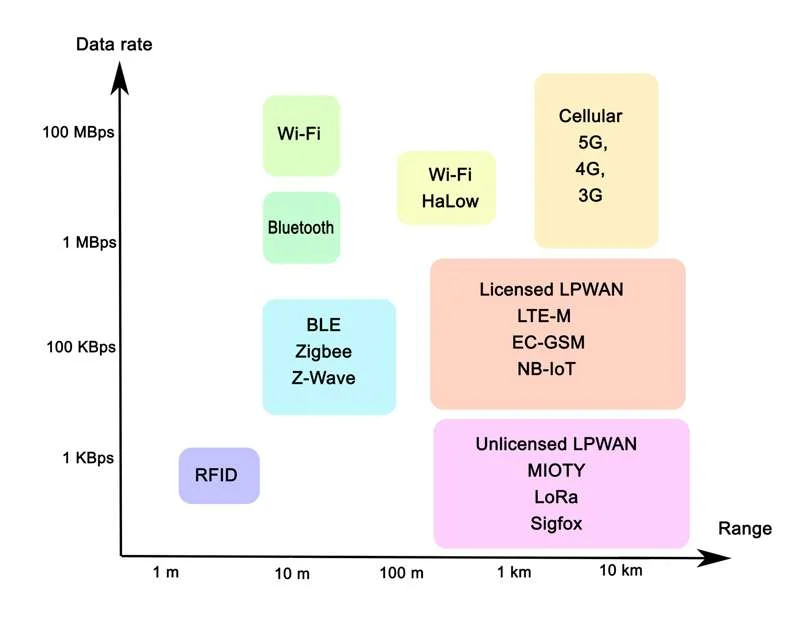
Bike-sharing systems commonly use three communication technologies: 2G cellular modules, Bluetooth, and NB-IoT. NB-IoT provides wider coverage, supports higher device density, and consumes less power, and it is increasingly adopted in bike-sharing deployments.