 ALLPCB
Capacitive Touchscreen vs TFT LCD: Key Differences
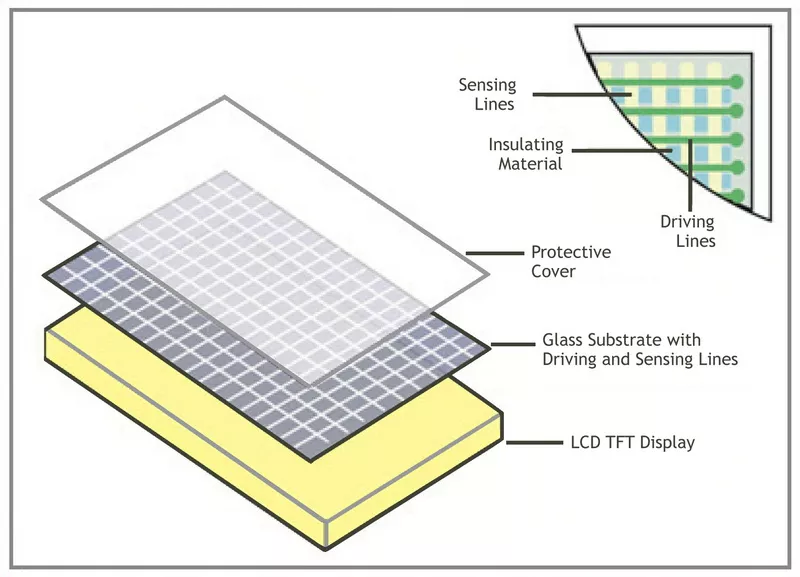
Explains differences between a capacitive touchscreen and a TFT LCD: the glass touch sensor detects input while the TFT LCD renders images, often stacked in smartphones.



Explains differences between a capacitive touchscreen and a TFT LCD: the glass touch sensor detects input while the TFT LCD renders images, often stacked in smartphones.
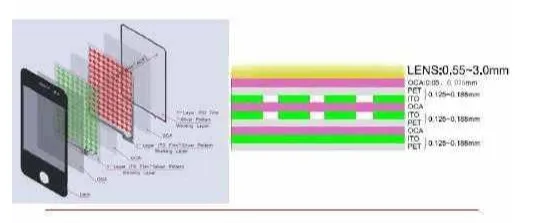
Overview of metal mesh as an ITO alternative for touch panels: materials, fabrication methods, adoption and key challenges in transmittance, line width, and durability.

Technical overview of multitouch technology, covering sensing mechanisms (FTIR, LLP, optical) and implementation trade-offs for gesture recognition and axis-based systems.

Explains why early resistive touchscreens required user calibration and why modern capacitive touchscreens typically avoid calibration by using capacitance-based position sensing.

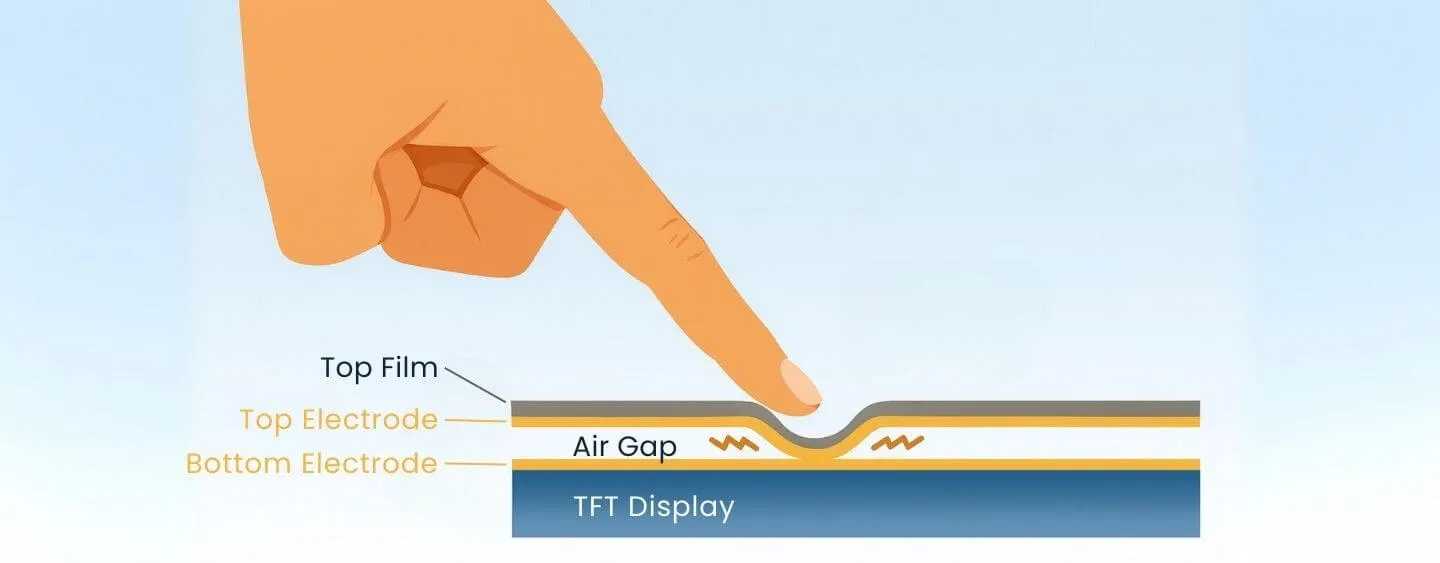
Overview of touch-sensing methods - capacitive touch, resistive touch, and radio-reception sensing - comparing principles, implementations, and environmental limitations.

Overview of face recognition: process, application categories, accuracy limits, unresolved challenges like occlusion and aging, and security considerations.
Explains why capacitive touchscreens require skin contact to register swipes, contrasts resistive touchscreens and styluses, and summarizes capacitive coupling principles.

Overview of two-point and position-based multi-touch on resistive touchscreens, covering contact resistance, ghost points, false touches, and averaging to improve coordinate accuracy.

Overview of face recognition devices: 3D image processing, face localization, preprocessing and matching workflows, and applications in access control and attendance systems.

Technical overview of touchscreen technologies comparing resistive, capacitive touch, wave-based and embedded (on-cell/in-cell) designs, applications, and performance trade-offs.

Smartphone touch sensing overview: capacitive, resistive, surface acoustic wave, and optical methods; touch sensing principles and causes/remedies for touchscreen failure.

Overview of touchscreen object recognition methods—capacitive touchscreen, resistive touchscreen, SAW, laser, inductive—and practical touchscreen testing and comparison.

Practical capacitive touch PCB design guidelines and AiP8F32XX MCU recommendations: routing, TouchPad sizing, Cadj selection, grounding, and layout tips for engineers.

Technical overview of a touch switch circuit using a 4013 dual D flip-flop, covering monostable timing, input protection, relay drive and toggle on/off operation.

Technical overview of capacitive touchscreen specs and types, covering report rate, accuracy, sensitivity, projected/surface capacitive designs and evaluation criteria.

Guide to integrating Broadcom APDS-9960 IR gesture sensor with microcontrollers using I2C and CircuitPython, covering principles, wiring, code, and tuning tips for reliable detection.

Analysis of smartphone screen quality and user comfort, focusing on touchscreen responsiveness and linear motor haptic feedback differences across brands and models.

Capacitive touch-key design with CH582/CH583 Bluetooth SoCs and drive shielding: prototype signal improvement, reference schematic, and low-power operation (~15 uA standby).

Overview of biometric information, common modalities (fingerprint, iris, face, voice), principles and system workflow from data collection to feature extraction and matching.

Guide to touchscreen troubleshooting and maintenance for SAW, five-wire resistive and infrared types: causes, calibration steps, LED diagnostics and hardware checks.