 ALLPCB

Why Touchscreens Require Skin Contact to Respond
Explains resistive vs capacitive touchscreen operation, why resistive needs pressure and capacitive relies on body coupling; effects of gloves and water.



Explains resistive vs capacitive touchscreen operation, why resistive needs pressure and capacitive relies on body coupling; effects of gloves and water.

Analysis of the Galaxy Fold display failure: how hinge geometry and support stress flexible display in foldable phones, causing bulging, touch loss, and blanking.
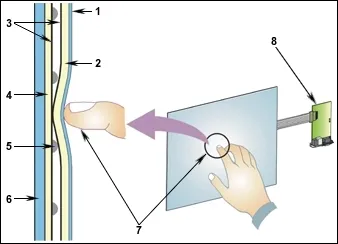
Technical overview of capacitive touchscreen operation: explains capacitance, ITO electrode grids, projected-capacitive multitouch sensing, and why protectors work but gloves fail.

Technical overview of face recognition: detection methods, feature types, challenges (illumination, pose, occlusion), applications and security concerns in biometric systems.

Analysis of iris recognition challenges, advantages and comparison with face recognition, covering accuracy, spoof resistance, cost, device dependence and deployment trade-offs.

Technical overview of touchscreen technology, system architecture, and comparison of resistive and capacitive touch sensing methods used in embedded devices.

Overview of common touchscreen technologies and how mobile touch works, explaining capacitive and resistive touchscreen principles, SAW, optical and light-guide methods.

Overview of resistive touchscreen and capacitive touchscreen technologies: operating principles, pros and cons, multi-touch behavior, durability, and input suitability.
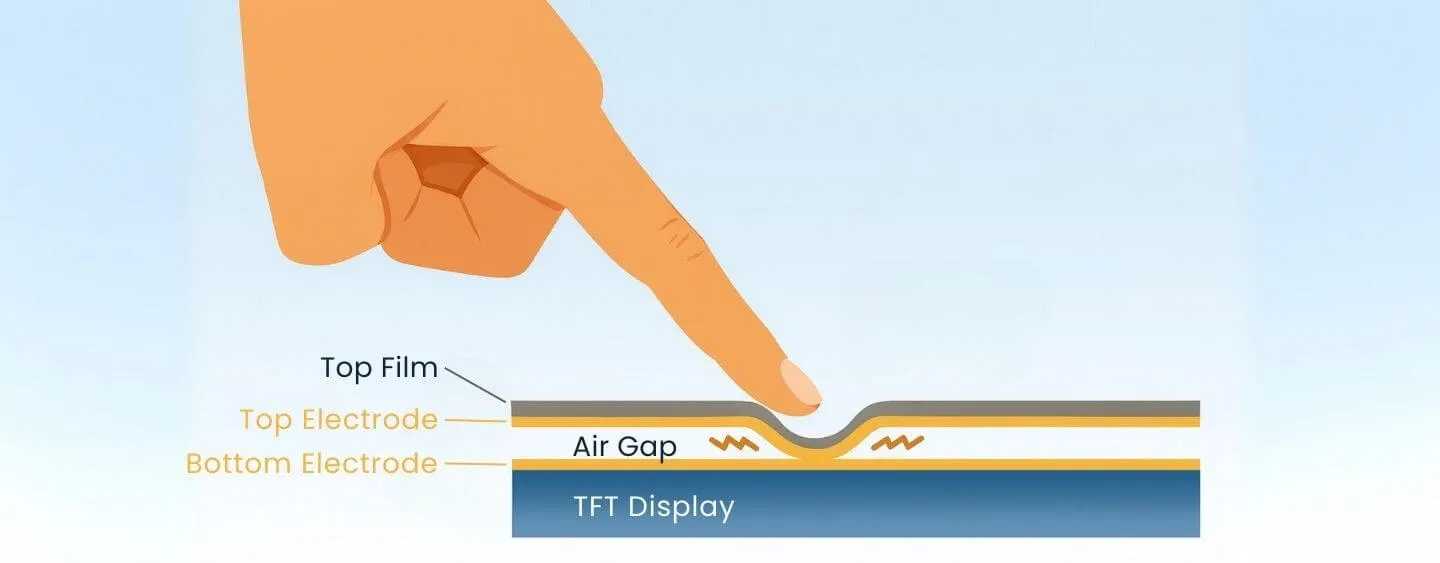
Explains differences between a capacitive touchscreen and a TFT LCD: the glass touch sensor detects input while the TFT LCD renders images, often stacked in smartphones.

Technical overview of pyroelectric sensor-based PIR motion-sensing lights, detailing Fresnel lens optics, detection principle, sensor materials, installation and key usage factors.