 ALLPCB

Memory Alignment in ARM Embedded Systems
Technical overview of memory alignment in embedded systems: reasons, ARM/MMU requirements, atomicity, NEON constraints and cache-line effects on performance.



Technical overview of memory alignment in embedded systems: reasons, ARM/MMU requirements, atomicity, NEON constraints and cache-line effects on performance.

Explore practical methods for embedded software decoupling. This guide covers system layering, event-driven patterns, and dependency injection for scalable code.

Why C is preferred on microcontrollers and a simple STM32 LED chaser in C++ with Keil MDK, extern C tips and binary size trade-offs.
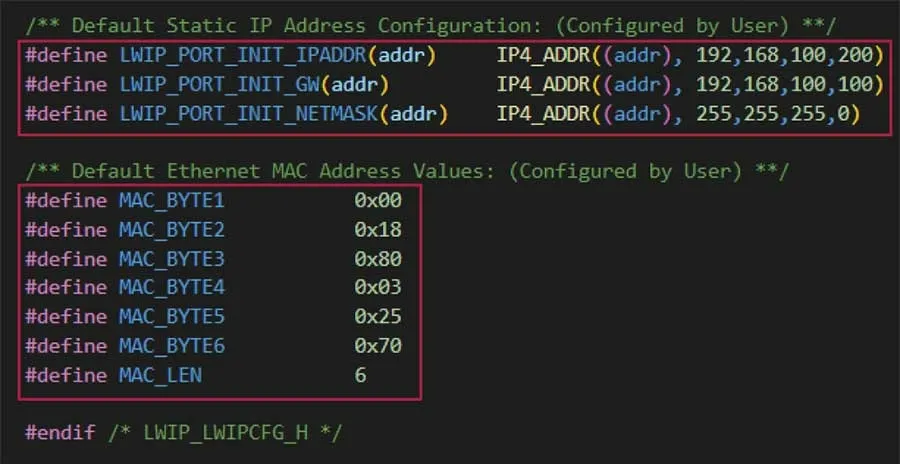
Explains how lwIP handles multiple open sockets in embedded systems, detailing impacts of memory, CPU performance and network bandwidth on socket count.

Explore the evolution of STM32 from 72 MHz MCUs to 1.5 GHz MPUs like the STM32MP257. Learn how AI and IoT demands are driving performance gains.

Learn to set up a CLion, GCC, and CMake development environment for CW32 microcontrollers. Get a project template, toolchain config, and flashing guide.

Explore the UART protocol's standard data frame. Learn why increasing data bits beyond 8 or 9 can fail due to clock drift in asynchronous communication.

Memory basics and OS management: ROM/RAM/Flash, contiguous vs noncontiguous, partitioning, free-list allocation and algorithms.

FPGA reset strategies: how synchronous/asynchronous resets affect speed, area, power and how to optimize designs using set/reset and SRLs.

Overview and classification of embedded microprocessors, describing architectures, capabilities, trade-offs, and common use cases; highlights SoC integration.